Showing posts with label North America. Show all posts

Thursday, May 19, 2011

Political Market Failures

Shanta wonders how to respond to the political market failures that lead a majority of voters in very poor countries to not vote for policies that would benefit the majority. Option 1 is to favor policies that rely on politicians as little as possible, though “they don’t always work. An attempt to reduce health-worker absenteeism in India by introducing time-date stamp machines to record attendance failed when, the night before the program was to start, all the machines were vandalized.” The other path, of course, is to improve the system, but since we usually need people who benefit from the current system in order to establish the better one, this may be more difficult than he lets on.

Speaking of political market failures, which of these is the bigger failure, this one in the US, this one in Tunisia, or this one in Canada?

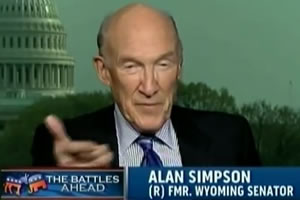
1) "According to former Senator Alan Simpson not only did he not familiarize himself with the relevant life expectancy data during his many years in the Senate, he’s never once brought it up during his months of work on a commission specifically charged with re-evaluating America’s retirement programs."

2) "Landowners are trying to build as fast as they can while the building codes go unenforced. When a new government comes in this summer, everyone thinks that window of opportunity will close."

3) "Ruth-Ellen Brosseau [is] the MP-elect for a French-speaking district outside Montreal. Brosseau doesn’t speak French. She doesn’t even live in Québec. Nor did she make any effort to actually campaign in support of her own election. Apparently, she never even set foot in the district or made a single public statement during the six-week election campaign [and was on vacation in Las Vegas during the campaign]. Nevertheless, she defeated the incumbent Bloc MP by more than 10 percentage points." In fact, on May 7 she finally broke her silence to speak with the press and said that, while she had never been to her district, she "plans to go soon," adding “I’m really excited to come, I’ve heard it’s a beautiful place.”

The Mises Institute kindly tells us how the third could happen:

Wednesday, January 26, 2011

An International Recipe

Pork and Beef from NotCanada: Canada has been so kind as to regularly invite the neighbors over for a good old fashioned meat inspection. It saves time and transaction costs to have US inspectors give an opinion or two on Canadian meat products, many of which are subsequently sold south. Normally the inspectors find some problems at a few individual plants and make some friendly recommendations. This time around, the problems they found were far more systematic, the government had failed to follow up on problems noted in the last inspection, the government had also failed to follow its own manuals at plant level, and 6 of Maple Leaf's plants (Canada's largest meatpacker) were either banned from shipping to the US or served notice that they would be banned if they didn't clean up at once.

Quinoa from Bolivia: Once pushed aside by Spaniards in favor of wheat,quinoa's rising popularity among foodies has increased its price seven fold since 2000 even as production increased tenfold. The increasing price, however, has led farmers to export the vast majority of their crop and instead eat rice and beans, lowering the families' nutritional wellbeing. Bolivia and Peru produce 97% of the world's quinoa. Farmers say it is not lifting them out of poverty, but they are living better.
President Evo Morales' government has deemed quinoa a "strategic" foodstuff, essential to this poverty-afflicted nation's food security. It is promoting the grain and has included quinoa in a subsidized food parcel for pregnant women....
Quinoa (pronounced KEEN-wah) provides 10 essential amino acids, is loaded with minerals and has a high protein content — between 14 and 18 percent. The FAO (U.N. Food and Agriculture Organization) says it is so nutritious it can be substituted for mother's milk.

"This food is about the most perfect you can find for human diets," said Duane Johnson, a 61-year-old former Colorado State agronomist who helped introduce it to the United States three decades ago.

Quinoa isn't a cereal. It's a seed that is eaten like a grain, but is gluten-free and more easily digestible than corn, wheat, rye, millet and sorghum. And it can be substituted for rice in just about anything — from soup to salad to pudding to bread.
Onions from India: A delightful article on the political economy of very particular foods and the importance of keeping the urban middle-class happy, rather than farmers.
You might find it hard to believe, but high prices of onions can trigger the fall of the government in India. In 1998, a supply side shock led to a sharp increase in onion prices in the country and most notably, in the state of Delhi. In the following elections, the ruling party was routed in large part due to its failure to control the price of onions in the capital state. Today, onion prices in India are up again, rising by over 100% in just three weeks in December [and the government has responded in short order.]
Commenters complain, however, that onions are in fact a staple and affect the welfare of the poor greatly. (Eg.: "For many poor people in the villages Onion is the only item eaten with bread.")

Beans from Malawi?: Scientists are arguing that the Malawi government should encourage farmers to plant beans (pigeon pea, actually) with their maize to reduce the cost of Malawi's fertilizer subsidies. Pigeon pea fertilizes the ground so fertilizer costs are cut in half, improves the productivity of the synethetic fertilizers that are used, and stabilize and increase production. Currently the talk is of complementing fertilizer rather than removing them.

Tuesday, November 9, 2010

Adventures in Protectionism

This is the kind of ignorance we're up against.

Pride Goeth Before A Deal

Call Center | Edmonton, AB, Canada
(I work at a call center in Canada dealing with American cell customers. This is a call from a customer in Seattle.)
Me: “Hello, thanks for calling [Company Name]. How may I help you?”
Caller: “Does your company outsource to India?”
Me: “I don’t know for sure, but I know it does hire companies out of the USA.”
Caller: “I’d like to cancel my service, then.”
Me: “I can do that for you. May I ask why you’d like to cancel?”
Caller: “I don’t support companies that don’t support America. If they’re hiring out of America, then I don’t want to support them.”
Me: “Alright, I’ll process that cancellation for you.”
Caller: “Am I calling to India?!”
Me: “No. I’m actually in Canada.”
Caller: “Oh, I love Canada! I do all my shopping there. Everything is so much cheaper!”
So tell me, Watson, would you be happier if he recognized that Canada is not part of the USA and didn't want "our" jobs to go to a bunch of Canucks?

I don't think consistency is really what I'm worried about, Holmes. Educating this person that Canada is not part of the US might actually make his effective protectionism worse instead of better. A little more education can also be a dangerous thing.

Tuesday, August 31, 2010

Planning my next vacation in Canada

My next vacation in California hasn't even started yet (Saturday), but this makes me want to start thinking of jaunting up north a bit: a board game cafe called Snakes and Lattes. Pictured is one of the games bookcases.

(in which as usual I have no financial interest.)

Thursday, August 19, 2010

Lit in review: 3 on meat markets

Anderson and Hudson "Acquisitions and Integration in the Beef Industry" [Policy Issues, Sept 2008] discuss the growth of Brazilian beef processor JBS, who bought up Swift, National Beef, and Smithfield to become the largest beef processor in the US [more recent, unfavorable, views on further expansion here and here]. In the process, they also gained control of the largest feeding operation in the US, vertically integrating these for the first time. The percent of "cattle obtained through non-price methods increased from 20.5% to 40.4% between 1988 and 2006". The factor driving the acquisitions is low cattle numbers and resulting overcapacity. Since 2002, each Congress has considered (without taking action) limiting packers' ability to own cattle directly.

Gunderson, Lusk, and Norwood (2005), "Getting Something from Nothing: An Investigation of Beef Demand Expansion and Substitution," Review of Agricultural Economics, Vol. 31, No. 1, 68-87.
In order to do a proper choice experiment, you have to give participants the option to buy nothing. Most of the time, economists have ignored the nothing, but the authors believe there can be significant information in it (so we can get something from nothing ... clever). Specifically, they investigate how consumers substitute between nothing and new products to identify whether the introduction of a new product increases total demand for the class of products or whether demand is largely stolen from other products in the same class. They find that for a new "natural" steak, total steak demand increases with significant differences in the negative impact between USDA Choice steak (larger negative impact) and ungraded beef (smaller).

In the same issue, Rude and Gervais (2005) consider "Biases in Calculating Dumping Margins: The Case of Cyclical Products."
Dumping is identified by exporting goods at a price below "normal" in the home market. But if you have a cyclical product, the trough periods by definition feature below normal prices. And if you have a case like the US/Canada hog industry, the cycles are very well matched. So US hog producers are upset at Canadian imports just at the same time that prices are low (because prices are low) and so cry "dumping!" The authors find an 11% dumping bias that could only be partially addressed by estimating costs over short time periods.

Tuesday, August 3, 2010

Cool maps

Watch the spread of unemployment by county in the US during the current recession. Hat tip: MR

Extra credit: What implications does this have for the zombie apocalypse?

And from Worldmapper: net meat exports (one of ten maps in which Canada is larger than the US)


and LDS (Mormon) population

Friday, March 26, 2010

Improving Governance with Gallup

Gallup surveys people's well-being in 155 different countries and got former Mexican President Vincente Fox to advertise for them. Fox says the great thing is that it's a tool to help policy makers know what their people really need. It's a means for getting customer feedback - he even uses the word customer - of increasing participation and letting the people voice their primary concerns.

Unfortunately, that's not what it does. The Global Wellbeing Survey asks people to rate their lives on a scale from 0 to 10 "the best possible life."
Individuals who rate their current lives a "7" or higher AND their future an "8" or higher are "Thriving." Individuals are "Suffering" if they report their current AND future lives as a "4" and lower. All other individuals are "Struggling."
This number follows the economic data pretty well, but it's another way for the Danes and other Scandinavians to show they are happier than everyone else, that Americans are happier than Europeans - Tino will I'm sure have much to say about this - and that Sub-Saharan Africans are miserable (median 8% thriving). That, or it means that Scandinavians don't have as good imaginations as Americans.

What it doesn't do is explain why. When they asked ex-Pres. Fox how he would use the data, he described what he believed to be Mexicans' greatest concerns, and off we go with another world of politicians imagining they know more than they do. Thank you, Gallup.

Thursday, February 18, 2010

Lit in Review: Livestock risks

From the last issues of the Review of Agricultural Economics (2009), Vol. 31, No. 3 and 4.

McCann (2009) "Transaction Costs of Environmental Policies and Returns to Scale: The Case of Comprehensive Nutrient Management Plans," No. 3, 561-573.
Livestock produce fertilizer. Put too much fertilizer on the land and the soil nutrients potentially end up in the drinking water. In the US, large livestock operations are required to have comprehensive nutrient management plans, made either by a government official or a private technical service provider. Recent studies have shown that farmers with plans put fewer nutrients on their land than those without, but still are putting too much on.

Eventually, the government hopes to expand this requirement to all livestock farms. Small and medium-sized farmers [I know what you're envisioning: munchkins raising guinea pigs. Let's not be silly.] face a number of transaction costs that larger farmers don't [it takes more steps to cover the same ground, for one. Stop that!] and extension services are not widespread enough to cover small farms as well. Farmer surveys (26 observations out of 1030 returned surveys out of over 3000 sent out to farmers in Iowa and Missouri. meh!) said the average monetary cost of preparing the CNMP was $460, with nothing significantly correlated, plus about 17 hours of work on the farmer's part [11 hours for the smallest farms, 24 for the largest] and 149 hours from government officials. The more animals you have, the lower the total cost per animal is.

Thus the conclusion is that extending the current set up to small and medium livestock farms would give large firms additional cost advantages. She argues that another method needs to be devised to keep the playing field level while still reducing the risk of environmental damage from livestock operations.

Elbakidze, Highfield, Ward, McCarl, and Norby (2009) "Economics Analysis of Mitigation Strategies for FMD Introduction in Highly Concentrated Animal Feeding Regions," No. 4, 931-950, ungated  An outbreak of Foot-and-Mouth Disease in Britain at the turn of the century caused damages of $720 to $2300 million, and larger losses in tourist income. Their simulation model has two components: an epidemiological model of disease risk and spread patterns and an economic model to examine losses. They include a fairly detailed table on the costs for appraisal, cleaning, vaccinations, etc by herd size and a rough estimate of the value of the livestock at different weight assumptions, including twelve classifications of cattle, six sheep, and six pigs.

Simulations indicate an outbreak of FMD in Texas would cost $1 billion in Texas cattle alone. Early detection efforts would save $150 million just for large feedlots and $3 mil for backyard production, so there's a fairly large margin to spend on the efforts. "Vaccine availability and enhanced surveillance were not economically effective ... compared to delayed vaccine availability and the default surveillance strategy." This is in part due to the assumption that vaccinated animals lose 50% of their value due to trade restrictions, though trade losses are not included in the model themselves.


Carlberg, Brewin, and Rude (2009) "Managing a Border Threat: BSE and COOL Effects on the Canadian Beef Industry"No. 4, 952-962
This teaching case describes cattle production and processing capacity in Alberta and Saskatchewan. Cattle processing used to be more spread out across Canada, but technological changes concentrated the processing in those two provinces. Farmers in the other provinces either trucked their animals across the country to have them processed or shipped them into the US. Just before the BSE [Mad Cow Disease] outbreak in 2003, 44% of Canada's cattle came into the US for processing. The BSE outbreak shut that down completely, glutting Canada's processors and wreaking havoc with cattle prices.

In response, the US has drafted mandatory Country of Origin Labeling (COOL) laws that came into effect March 2009. Some estimates indicated that processing costs could be as high as $50 million per plant to segregate the animals and their meat, a 2% per head increase. Since meatpacking is a low-margin business, this is economically important. Of course, you can avoid many of these costs if you don't use animals from other countries, so this has the potential to significantly decrease US plants' willingness to process Canadian livestock. There are plans to increase Canadian processing capacity to reduce reliance on US processors, just in case.

[Cow 1: Are you worried about becoming a raving lunatic because of BSE too?
Cow 2: Me? No. I'm a horse.]
Wednesday, November 11, 2009

Lit in Review: Livestock

One of the things I have looked forward to in starting a work blog was writing up brief summaries of some of the research others' have done with comments. In part I hope to provide a service for others, bringing you a summary of recent research. In part though it's a convenient place for me to keep my notes about research I've read so when I scratch my head trying to remember who said what, I've got my notes most readily available and searchable for my own benefit. Please feel free to debate particular papers or to bring more on a particular topic to my attention.

Review of Agricultural Economics Fall 2009: Livestock articles

"The Economics of Dairy Anaerobic Digestion with Coproduct Marketing" by Bishop and Shumway. Descriptive, single firm. One of the solutions to the pollution livestock produce is to install some machines to turn methane into electricity (anaerobic digestion technology). But is this economical? The authors find that the main private benefits in the first two years of operation for dairy farms in Washington state come from producing and selling electricity to public utilities and in receiving payments for turning other people's organic waste [salmon carcasses, cheese whey, inedible eggs] into electricity. Average profits for running these machines were $75k and $140k in year 1 and 2, but they cost $1.1mil to set up. The authors emphasize that location - proximity to coproduct markets - matters. Regulations would need to be changed to synch up the incentives of farm-energy-producers and public utilities. - Note for Chapter 8. (picture: CalPoly anaerobic lagoon, from Wiki)

"Agricultural Trade among NAFTA Countries: A Case Study of US Meat Exports" by Henneberry and Mutondo. Demand analysis, 1995-2005. US meat exports doubled to both Canada and Mexico since NAFTA [correlation is not causation] and account for 40% of beef, 35% of pork, and 17% of US poultry exports 2002-05. This is despite the 2003 BSE outbreak and increased competition from other countries. Poultry and beef from your own country are substitutes if you don't account for country of origin and complements if you do (Yang and Koo, 1994), so the distinction matters in demand analysis. Canadian meat buyers are not very price sensitive to US meat prices, so increasing meat prices likely means increasing revenues from Canada, but the opposite is true for Mexico. - Meatpacking book

"Costs of Adopting a [HACCP] system: Case Study of a Chinese Poultry Processing Firm" by Wang, Yuan, and Gale. Descriptive, single firm - Beijing Dafa. As part of its accession to the WTO, China has pushed to improve exported meat quality since Dec 2001. Setup cost the firm $4.2mil or 2% of gross income, with ongoing monthly costs of $0.3mil - half of that is sanitation. Benefits were characterized as long-term, strategic, and intangible [reduced inferior and adulterated products, improved reputation, consumer loyalty, and product consistency, and increased exports]. The authors are concerned that the costs may be very difficult for small, domestic producers to recoup, who would likely face higher costs and less ability to increase prices to make up for it. - Meatpacking book