Showing posts with label Tanzania. Show all posts

Friday, December 23, 2011

Agriculture repeats itself

Chapter 10 of my textbook on Food Policy for Developing Countries discusses nanotechnology and the fact that companies have a vested interest in ensuring that nanotech does not become the next great consumer scare. To do that, they need to make sure there is public debate, address consumer concerns early on, openly, forthrightly, and without condescension. Governments have an important role to play also in clarifying up front what standards will be required. Having a clear regulatory framework will encourage companies to invest and make it easier for them to demonstrate openly that their products meet safety standards. Here is M. Nestle agreeing on the scope of the problem and supplying some new reports on the subject.

There is a hefty debate brewing on which framework should be used to debate international agricultural policies. Doha is going nowhere slowly. At COP17 African countries had been reasonably unified, but are less so now that South Africa is calling for a greater environmental focus, with Ghana, Mali, and Tanzania prominent on the other side of the debate. One of the better arguments in the article:
Harjeet Singh of ActionAid International said that farmers with fewer than two hectares would only be able to make $3 a year at the present rate for carbon. He said he did not doubt the intentions of South Africa in "pushing for climate-smart agriculture as the answer to agriculture's problems" but added that "climate-smart agriculture could benefit South Africa a lot because your farmers are large-scale and carbon markets work for agriculture on the industrial scale".
Cote d'Ivoire has announced the (re?)formation of a state cocoa board that will take over most of the higher level market functions. The article seems to be written from a Ghanaian-centric viewpoint, worrying about how the CdI board will be able to compete with Ghana's and the likely impact on world prices [which will be lower, duh, because the civil war kept cocoa production and sales much lower].

And for variety, here is an interview with a Zimbabwean crocodile farmer. He has 10,000 crocs at a time, which he exports to Europe and Asia to sell their skins and meat. Among his major costs are importing the beasts to feed the crocs and trying to get enough eggs to keep the project at that size.

Friday, November 11, 2011

Mixed Bag: good and bad in African agriculture

In the most distressing news I've heard recently put in a positive light, 20 Tanzanian farmers were invited to Uganda to learn more about using human feces as fertilizer. They would like to convince us that this is a good thing because fertilizer use is so low, but it's also a great way for spreading diseases. Their numbers are 20 years old, but show that a lot more fertilizer is supposedly distributed than was ever spread on crops. That doesn't suggest the problem was lack of fertilizer availability.

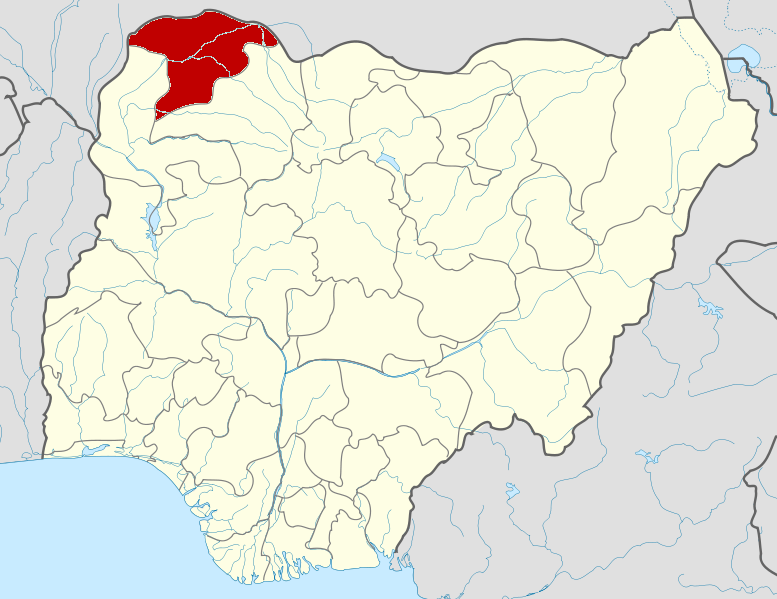
Flooding in northwestern Nigeria (Sokoto state, pictured) destroyed 1 billion Naira worth of crops ($6.7 million).

In much happier news, ICRISAT has been providing some Mali farmers with groundnut (peanut) seeds that take only 3 months to harvest instead of 4. As rain patterns have shifted, assumedly due to climate change, the rainy season has been getting shorter and shorter. If I understand the report correctly, it claims that groundnut production has also increased 10-fold.

They also established a cooperative (starting at 20 members, now 65) to coordinate storage. Each member of the cooperative contributes 20 kg of groundnuts for storage. 10 of them they get back later in the year (as a form of forced storage for behavioral economics reasons) and the other 10 are sold (for about $320) to give the cooperative a source of loanable capital.

Ugandan rice production is up significantly - 66% during the last decade. Instead of importing rice, they now export to South Sudan, Kenya, and DRC. The article credits Nerica (New Rice for Africa) with much of the growth. I take the article to be saying that a new survey by the Ministry of Agriculture claims that rice exports are now valued more than any other traditional food export.

Zimbabwe is going to start handing out agricultural input vouchers to vulnerable farmers this week, entitling them to "10 kilograms of maize seed, one 50-kilogram bag of compound D and one 50 kilogram bag of ammonium nitrate fertilizer."


Thursday, June 16, 2011

Harvard (et al) in Africa

The Oakland Institute is publishing a series of reports showing, among other things, that the "land grab" in Africa is not just about Middle Eastern countries, India, and China. US Universities are speculating that the value of land in Africa is going to go up, so they are buying low and selling high. Land is being bought at 1/2000th the price of land in Iowa and 1/1000th the price of land in Brazil. Note please that this is not a "market" price -- it is negotiated between government and (government, firm, institution, investor), usually with no input from or repayment for the people currently living and working the land. Eminent domain indeed: "a foreign investment group was able to acquire 100,000 hectares of fertile land in Mali for a 50-year term for free."
Researchers at the California-based Oakland Institute think that Emergent's clients in the US may have invested up to $500m in some of the most fertile land in the expectation of making 25% returns.
Emergent claims that it's not speculation or land grabbing, but that real investments are being made to make the land more valuable, and more productive to the extent it helps with it being valuable.
In Ethiopia, a process of "villagisation" by the government is moving tens of thousands of people from traditional lands into new centres while big land deals are being struck with international companies. [Ethiopia map source]

The largest land deal in South Sudan, where as much as 9% of the land is said by Norwegian analysts to have been bought in the last few years, was negotiated between a Texas-based firm, Nile Trading and Development and a local co-operative run by absent chiefs. The 49-year lease of 400,000 hectares of central Equatoria for around $25,000 (£15,000) allows the company to exploit all natural resources including oil and timber. The company, headed by former US Ambassador Howard Eugene Douglas, says it intends to apply for UN-backed carbon credits that could provide it with millions of pounds a year in revenues.
Meanwhile the Republic of Congo (not the DRC) is giving 80k ha to 40 of the white farmers ousted from Zimbabwe a few years back:

Thursday, June 2, 2011

Lit in Review: Child health

An excellent natural experiment: the electricity was cut from Zanzibar for 4 weeks in May, 2008. Families who had just gotten pregnant and wouldn’t have known about it yet wouldn’t have done anything to change their behavior, but families who did know they had a pregnancy would adapt behavior to safeguard the mother’s and child’s health. As a result, women who knew they were pregnant delivered babies within the usual distribution for Zanzibar, while women who had not known were 11% more likely to give birth to children with low birthweight, according to a new paper by Burlando. Food prices hadn’t changed. Also interesting is that there was a increase in babies born 9 months after the blackout (also about 11%). Friedman particularly highlights the long-lasting effects of temporary shocks.
Vasilakis also has a new working paper on poverty and child malnutrition, using an overlapping generations framework to generate malnutrition-induced multiple equilibria and poverty traps. He models several different World Food Program policies. In his model, a school feeding program “locks” poor countries into a poverty trap by increasing fertility and lowering human capital, but the country could escape. A school feeding program increases efficiency and human capital accumulation in middle-income countries. WFP food price subsidies or investments in local agriculture and food industry allow poor families to increase human capital in their children and increase incomes, helping the country out of poverty. Clearly the body is buried in the adopted and adapted Becker model of fertility decisions (parents face a quantity/quality tradeoff). Since my read of the literature has made me skeptical of the fertility model, I end up skeptical of these results, but the rest of the set up (2 period OLG with poverty traps) is quite interesting.
Glewwe, Park and Zhao (HT:MR) have a work in so much progress there are still notes from the authors to each other in the pdf: 
after one year, making eyeglasses available increased average test scores by 0.09 to 0.14 standard deviations (of the distribution of the test scores). For those students who accepted the glasses, average test scores increased by 0.12 to 0.22 standard deviations….
Cowen asked who refused the glasses and why. About 30% of the children who were eligible were not outfitted. “The stated reasons for not accepting them are not very informative, the two most common reasons being 'child refused' and 'parents refused.'” Running some simple regressions, acceptance is correlated with eyesight (worse eyesight means more likely to accept), already having eyeglasses (more likely to accept a new pair), “children of schoolteachers 22.4 percentage points less likely to accept eyeglasses, and children of party cadres 35.2 percentage points less likely to accept them”, and higher income towns were more likely to accept.

Monday, March 14, 2011

Five Second: Economist on the new food regime; Part 1

The Feb 24 edition of The Economist contained a special insert on the global food situation since the global food price crisis of 07/08. Here are some of the highlights:


On the potential for improving agricultural productivity in Africa: “Given the same technology, European and American farmers get the same results.”

On obesity they aren't quite right: “Food is probably the biggest single influence on people’s health, though in radically different ways in poor countries and in rich ones, where the big problem now is obesity. … In the favelas (slums) of São Paulo, the largest city in South America, takeaway pizza parlours are proliferating because many families, who often do not have proper kitchens, now order a pizza at home to celebrate special occasions.” Obesity has been and is growing rapidly in developing countries where sometimes within the same family you can find both hunger and obesity.
On nutrition vs. calories: “Feeding the world is not just about calories but nutrients, too; and it is not about scattering them far and wide but pinpointing the groups who can and will eat them.”
“In Tanzania, children whose mothers were given iodine capsules when pregnant stayed at school for four months longer than their siblings born when the mother did not get those capsules.” “Half of those over 75 in hospital are reckoned to be nutrient-deficient, as are many obese people.”

Fortification: “Better nutrition, in short, is not a matter of handing out diet sheets and expecting everyone to eat happily ever after. Rather, you have to try a range of things: education; supplements; fortifying processed foods with extra vitamins; breeding crops with extra nutrients in them. But the nutrients have to be in things people want to eat. Kraft, an American food manufacturer, made Biskuat, an “energy biscuit” with lots of extra vitamins and minerals, into a bestseller in Indonesia by charging the equivalent of just 5 cents a packet. It also did well in Latin America with Tang, a sweet powdered drink with added nutrients, marketing it to children for the taste and mothers for its nutritional value.”

Biofortification: “It is also possible to breed plants that contain more nutrients. An organisation called HarvestPlus recently introduced an orange sweet potato, containing more vitamin A than the native sort, in Uganda and Mozambique. It caught on and now commands a 10% price premium over the ordinary white variety. The local population’s vitamin intake has soared.”

If we produce enough calories to feed the world now, “why worry about producing more food? Part of the answer is prices. If output falls below demand, prices will tend to rise, even if “excess” calories are being produced. … Pushing up supplies may be easier than solving the distribution problems.”
The downside of Zero Tillage: “weeds. They like to grow in the mat as much as crops do.”

Thursday, March 10, 2011

Small bag between meetings

I have been actively job marketing this week, sorry for the few postings. While I wait for the airport, here are a few quick links to tide anyone over who has missed their daily dose of Derrill:

A one thought summary of what the left and right are missing out on by Kling in response to Cowen's longer lists of the same:

What I think left-leaning economists should do more:
Look for structural reasons for policy failure, rather than attribute it always to misguided ideology. Consider the implications of imperfect knowledge on the part of government actors. Also, consider that the existence and growth of special interests is at least partly endogenous with respect to policy.

What I wish that right-leaning economists would do more:
Look for structural explanations for the growth of the state, rather than attribute it always to misguided ideology. Consider the implications of urban density. Consider that as the economy becomes more complex, the potential dispersion in wealth due to differences in ability, information, and luck becomes very large, while the ability to overcome such differences with sheer effort probably declines.

Yglesias' comments on oil prices have some application to food prices as well: when moving supplies are short (as they were in 2007/08), supply becomes much more price inelastic in the short run. Again similar to his comments on oil, there are policies we and other countries could use to reduce susceptibility to food price swings or reduce their frequency.

Yglesias also points out that "a world where ten rich bankers pay the taxes to finance make-work jobs for ninety other people isn’t an alternative to a pity-charity version of economic justice it’s just a way of hiding the ball."

Blattman points us to some happy news: Tanzania has granted citizenship to 162,000 refugees who have been there since 1972 or who were later born there as refugees. They had close to 700,000 refugees and told them to either apply for citizenship or go back home.

I can see the children's book on development now: If you give a man a cellphone...   [if you don't get the joke, try here]   More on the project here.

Friday, January 21, 2011

Investing in African Agriculture

Senegal now produces 50% of its rice consumption, according to the government. This is up significantly from earlier and claimed to be the result of the president's agricultural investment program. Producers associations apparently claim production is not up that much.ni

Tanzania is hoping to triple rice production in three years. They are partnering with AfricaRice, targeting larger farms, and pushing genetically modified Nerica (NEw RICe for Africa) varieties. If successful, this would move Tanzania from being a rice importer to a rice exporter. The article praises Nerica:
Guinean farmers have managed to increase their yields by 50 per cent without the use of fertilisers and by more than 200 percent with fertilisers. Cultivating Nerica varieties also has shown a positive effect on schooling rate of children. This effect is partly the result of Nerica’s shorter growth cycle and higher weed competitiveness, alleviating the labour burden put on children, and partly as a result of the higher yields and quality, generating higher revenues.
A Norwwegian company is also investing in Tanzanian fertilizer capacity, according to a company press release. The Mozambique government is investing in livestock, also according to company press releases.

Researchers speaking at the December climate change conference in Mexico argued that a "culture of maize" was holding back African farmers' ability to cope with climate change.
Blessing Chinsinga, science and research lecturer with Chancellor College University of Malawi: “While politicians equate the availability of maize to food security, a family without maize in the farming communities is associated with vulnerability. If you have millet or sorghum, many will still think you are desperate because you do not have maize.” ...

Mclay Kanyangarara, climate change advisor for the Common Market for Eastern and Southern Africa:  “Maize is an introduced crop and the small grains have always been our traditional indigenous crops, which are better suited to our climate. Maize is also more capital intensive, requiring a lot of fertilizer and pesticides and we need to realise that we cannot force it to grow."
The mechanization of tea leaf picking in Kenya is not met with universal approval. Anyone surprised?

Saturday, October 23, 2010

Two Successes in African Agriculture

In a news report that could be a reprinted press release, Zambeef - a Zambian meatpacker - reports that they have grown from "an abattoir and two butcher shops" into a $200 million-a-year company. After a beginning that speaks of the great promise of Zambian agriculture to become African's next breadbasket, the rest of the article details the many infrastructural, financial, and societal limitations preventing agriculture from reaching its potential... in most cases.

FAO is also celebrating that rinderpest - a deadly cattle disease - is on the brink of extermination worldwide. This would be the second disease in the world we've eradicated (the first being smallpox). The disease came to Africa in the mid-1800s from Europe and Asia and has been known to single handedly cause famines and kill millions of people because of the loss of livestock. "When the disease arrived in Africa at the end of the nineteenth century between 80% and 90% of cattle and buffalo on the continent were killed." FAO is expecting the announcement of total eradication May 2011. The last outbreak was in Kenya, 2001. It was accomplished in large part by training locals to recognize the disease and getting them a vaccine developed in the 1960s. Reports emphasize the need for international cooperation to eradicate the disease: one country would make an effort to combat it, but it would spread to another country and come back again later.

In other news (where news = another reprinted press releases), Planters (you know, one of those eeeevil US MNCs) is training African cashew farmers about sustainable farming practices.

Thursday, July 1, 2010

East African Free Trade Zone Begins Today

Burundi, Kenya, Rwanda, Tanzania and Uganda will begin removing all (political) barriers to trade, to be complete in 2015. Gallup reports that citizens are in favor of allowing free movement of people as well, by a wide margin in most countries (87-91% in Burundi, Rwanda, and Uganda; 65% Kenya, 57% Tanzania).

BBC (Hat tip: Poverty News Blog) reports: "The hope is that member states will adopt a common currency by 2012, allowing them to move towards a political federation."

Wednesday, February 24, 2010

Lit in review: 3 and 4 of 7 on Food Prices

Two illustrating the methods of understanding how food prices change over time

(3) Ihle, von Cramon-Taubadel, and Zorya (2009), "Markov-Switching Estimation of Spatial Maize Price Transmission Processes Between Tanzania and Kenya," Nov AJAE, 1432-39.
They apply a Markov-switching vector autoregressive (MS-VAR) nonlinear time series model to corn price changes. The Markov-switching part means that we're looking at the probability of changing states rather than the direct probability of each state. The advantage of the VAR part is that it allows the price to be in a high or low regime depending on unobservable variables, while most threshold models focus only on observables. The unobservable they care about most is unpredictable policy changes or the threat of such changes. Tanzania's policies are described by Aliguma et al (2008, MSU working paper), Kenya's by Jayne, Meyer, and Nyoro (2008, Ag Econ). They do caution that we don't understand MS-VAR models very well yet, in particular how to avoid over-identifying the model, creating imaginary regimes that "explain" the data for no reason.

They find two distinct regimes when average price margins between Tanzania and Kenya are twice as high in the high regime as in the low regime. The probability of transitioning from high to low or vice versa is quite small: 8% chance of going down, 11% chance of going back up. Some of the high price margin episodes occurred without an explicit export ban, but every time there is an official export ban the price is high. They hypothesize this could be because of unofficial export restrictions or drought.

(4) Adachi and Liu (2009), "Estimating Long-Run Price Relationship with Structural Change of Unknown Timing: An Application to the Japanese Pork Market," Nov AJAE, 1440-47, ungated.
The model is linear, but allows there to be breaks in the data. The complexity is telling the difference between a change in parameters of the model and data non-stationarity. They examine Japanese retail pork and farm hog price data from 1967 to 2008.

If they don't consider the possibility of structural breaks, tests claim that the data is non-stationary. If they do allow them, however, nonstationarity is rejected at the 1% level. If they only allow for one structural break, they find it occurred (depending on specification) either in Feb 1974 or Feb 1975 for retail prices and for farm prices in Feb or Mar 1974. Given two breaks, retail prices change in early 1974 and late 1978, whiel farm prices change in mid 1978 and mid 2003. Each data series between break points is stationary.

A more general test lets them consider the possibility that there is "one more" break, and they come up 4 breaks altogether: Sept 1976, Oct 1982, Sept 1990, and January 1997, each with a confidence interval of no more than 12 months. They explain the breaks as: cheap feed imports from a strong yen that reduced farm prices but not retail; foot-and-mouth in Denmark; the beginning of Japan's lost decade; and shifting imports from Taiwan to the US and Canada for food safety concerns. The log of the retail pork price has been remarkably steady from 1984 to the present, particularly compared to the more volatile farm price.