Showing posts with label Uganda. Show all posts

Friday, November 11, 2011

Mixed Bag: good and bad in African agriculture

In the most distressing news I've heard recently put in a positive light, 20 Tanzanian farmers were invited to Uganda to learn more about using human feces as fertilizer. They would like to convince us that this is a good thing because fertilizer use is so low, but it's also a great way for spreading diseases. Their numbers are 20 years old, but show that a lot more fertilizer is supposedly distributed than was ever spread on crops. That doesn't suggest the problem was lack of fertilizer availability.

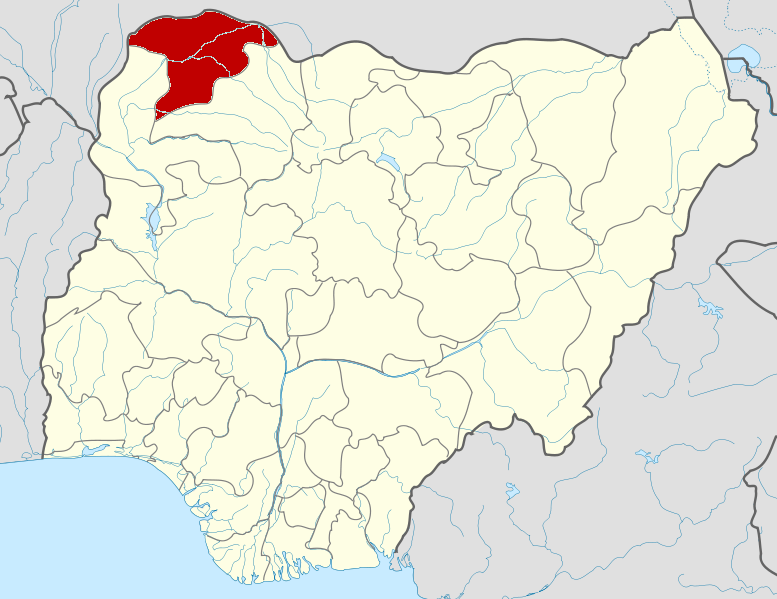
Flooding in northwestern Nigeria (Sokoto state, pictured) destroyed 1 billion Naira worth of crops ($6.7 million).

In much happier news, ICRISAT has been providing some Mali farmers with groundnut (peanut) seeds that take only 3 months to harvest instead of 4. As rain patterns have shifted, assumedly due to climate change, the rainy season has been getting shorter and shorter. If I understand the report correctly, it claims that groundnut production has also increased 10-fold.

They also established a cooperative (starting at 20 members, now 65) to coordinate storage. Each member of the cooperative contributes 20 kg of groundnuts for storage. 10 of them they get back later in the year (as a form of forced storage for behavioral economics reasons) and the other 10 are sold (for about $320) to give the cooperative a source of loanable capital.

Ugandan rice production is up significantly - 66% during the last decade. Instead of importing rice, they now export to South Sudan, Kenya, and DRC. The article credits Nerica (New Rice for Africa) with much of the growth. I take the article to be saying that a new survey by the Ministry of Agriculture claims that rice exports are now valued more than any other traditional food export.

Zimbabwe is going to start handing out agricultural input vouchers to vulnerable farmers this week, entitling them to "10 kilograms of maize seed, one 50-kilogram bag of compound D and one 50 kilogram bag of ammonium nitrate fertilizer."


Sunday, November 6, 2011

LDS Aid

Two professors, one a Cornell-trained BYU professor of nutrition, have been working to improve the Atmit porridge that is often given out in LDS care packages. The hope is that it will be even better for small children with a better mix of micronutrients (particularly more iron) but without compromising on shelf-life. Another article describes its dissemination in poor areas of Peru.
A single serving provides 34 percent of the recommended daily allowance of protein, 43 percent of calcium, 99 percent of iron, and high percentages for a dozen vitamins and minerals for children under 5 years old. ... 
In 2010, 645,000 pounds of Atmit were shipped by LDS Charities to four countries. Depending upon the age and size of the children, that's enough to feed 100,000 to 130,000 children for one month. The cost? Less than $6 (USD) per child.
LDS efforts to help those suffering from the famine in the Horn of Africa:
In Ethiopia, projects to aid more than 100,000 refugees are under way, including water tanks, trucking services, sanitation supplies and hygiene training for 15 villages; supplementary food for 8,700 malnourished children; nutrition centers and sanitation facilities for Somali refugees in Dollo Ado; and 5,000 hygiene kits.
The Church also plans to provide water catchment and storage structures, as well as soap and washbasins to serve tens of thousands of other residents in the communities surrounding the Dollo Ado camps.
Other projects in Kenya, Uganda, and Somalia are also underway and briefly described at the link.


At the most recent General Conference, Church President Thomas S. Monson reminded members about the General Temple Patron Fund. Donations from members around the world are used to help members who live far from a temple travel there. A recent article highlighted some of the saints in southeastern Africa who have been blessed by the Fund:

Thursday, October 13, 2011

Big Bag of Africa: Statistics, Governance, and Food

Shanta at the World Bank discusses the importance of good statistics to understanding what goes on in Africa:

Today, only 35 percent of Africa’s population lives in countries that use the 1993 UN System of National Accounts; the others use earlier systems, some dating back to the 1960s. To show that this is not an arcane point, consider the case of Ghana, which decided to update its GDP last year to the 1993 system.  When they did so, they found that their GDP was 62 percent higher than previously thought.  Ghana’s per capita GDP is now over $1,000, making it a middle-income country. ... 
Only 11 African countries have comparable data for the same year. For the others, we need to extrapolate to 2005, sometimes (as in the case of Botswana) from as far back as 1993.
In short, even the economists’ celebratory estimate of poverty declining in Africa during a period of growth needs to be taken with a grain of salt.  In reality, there are many countries for which we simply don’t know.
What’s going on here?
The vice president of Zambia, Guy Scott, is, to not put too fine a point on it, white. Jayawardane argues that this will be most surprising to people who believe African countries are primarily divided along ethnic and tribal lines. For Zambians and many other countries, however, status and occupation are much more important dividing lines.

A very vocal critic of Nigeria's government, Richard Dowden, was invited to speak to the government. He reports his shock at seeing Pres. Jonathan nodding and smiling encouragingly as he and other speakers described what was wrong in the government, including being the highest paid government in the world. His assessment of the president is cautiously optimistic, though he also still has some real questions.
My impression of President Goodluck Jonathan is that he is Nigeria’s first intellectual president – a laid back former academic who wants to walk round a problem before deciding what to do about it. He likes to listen and ask questions – taking his time to understand and reframe the problem.
In other news, nearly half of Zambia's maize production got soaked during the rains last week. While it does not have to be destroyed - the government is optimistic it will dry oat - it may well decrease the amount of maize for human consumption that would have been available after another bumper harvest.

Ghana is providing northern farmers with 110 combine harvesters as part of its agricultural subsidy programs that currently lower the price on 100-150,000 tons of fertilizer.

Banana wilt has already wiped out 20% of the crop in one Ugandan district and is threatening nearly all the rest. This is an area where bananas/plantains are a major staple food.

Thursday, May 26, 2011

Lit in Review: Impacts of thte 2010/11 Surge in Food Prices


Ivanic, Maros, Will Martin, Hasan Zaman. (2011). “Estimating the Short-Run Poverty Impacts of the 2010-11 Surge in Food Prices.” World Bank Development Research Group, Policy Research Working Paper 5633, Apr

In the 2007/08 price increase, most of the price increase was concentrated in staple cereals. This meant the effects were concentrated on the poor who had few outside options to shift to. In the current price shock, however, food prices have increased in many more commodities and by less overall. This means there are more substitutions available and much of the hit has affected foods the poor consume less of anyway. As a result, they estimate that only 44 million more people are poor instead of the 105 million more in 07/08.

However, it appears that price transmission is higher this time than last.

Friday, April 22, 2011

Post-liberation governance, aid effectiveness, and a less dismal science

On the difficulty of running a post-liberation government, with applications to Rwanda, Uganda, and South Sudan: 
the central challenge for power holders is often not economic, but political. Former rebels continue to use the informal mechanisms that suited them so well when conspiring outside government. Power consequently resides in a shadow state, characterised by the personal and reciprocal arrangements which developed in the struggle. … though optimists point to economic progress, the reality is one of intense intra-elite competition with incredible violent potential, as has been witnessed in all three countries in the past and as might soon occur again in Rwanda and South Sudan.
Last month’s violence in South Sudan between rebel groups and the government.   
“Satellite images released by US pressure group the Enough Project, appear to back up claims of troop reinforcements and northern ‘fortified encampments inside Abyei.’ … With the referendum over, [former peace] deals [between southern groups] are now falling apart as groups jockey for power.”
The ‘consensus’ still seems to be that outright war is unlikely, that enough people want to avoid it … but they don’t yet have the trust and social capital to make it a nonissue.

The Africa News Blog cynically posits that the lessons to be learned from Gbago’s fall are not the ones we might wish: don’t hold elections unless you know you’ll win, don’t let the news get out if they don’t, and do your election rigging well in advance (prevent opposition from getting out their voice) rather than trying to stuff ballot boxes.

How effective is aid in Madagascar? Aid doubled between 2008 and 2010 with few noticeable results.

How effective is aid in Haiti? Well, people would rather stay in the tent cities where conditions are much better thanks to the aid. Is that a good thing or a bad thing? It’s just a good thing we don’t have to actually talk to poor people to find out how to do this kind of work (/sarc)

Over lunch two weeks ago, I wondered at the fact that media don’t run more positive stories about Africa like the successful, peaceful, free, and fair elections that happened recently. After all, since the West expects bad news, reporting more bad news is just “dog bites man,” it’s not news. When things go right, why don’t we see more news announcements “Something Goes Right in Africa.” … Might make an interesting blog title, that. 

One answer to why not is because, among the people who have information about the continent, it’s in very few people’s interest to widely spread good news. Another name for it is the Tragedy of the Commons in Selling Tragedy by Kenny, who has a book out trumpeting development successes: Remember Tolstoy’s maxim: “happy families are all alike; every unhappy family is unhappy in its own way.” From its introduction, Kenny writes that
the proportion of the population of sub-Saharan Africa affected by famine averaged less than three-tenths of a percent. The proportion who were refugees in 2005 was five-tenths of a percent. The number who died in wars between 1965 and 2001 averaged one one-hundredth of a percent.
For instance, on the plus side the Somali government prevented the trafficking of a pair of endangered lion cubs. See, occasionally the news in Africa really is about lions!

Thursday, April 7, 2011

That doesn't look like inflation

Inflation in the price of vote buying in Uganda … isn’t really inflation. The price of potassium iodide pills went up faster than any economy has ever done with the exception of Hungary in 1946 … and that’s not caused by monetary inflation either. Clever commenter “david” points out that when his local coffee shop increased the price from $0.95 to $1.05 between his purchase of two cups, the “inflation” rate was even faster.
FAO is hosting a series of workshops to help countries devise better strategies to deal with high food prices.
Most economists have in the back of their mind the idea that Keynes showed monetary policy was ineffective at the zero bound during the Great Depression.  How many of these economists know that by the end of 1933 (with near 25% unemployment) Keynes was complaining that FDR’s monetary policy was too inflationary.
More on monetary policy and the business cycle (K Smith via Sumner):
keep always in the front of your mind that a recession is not simply a series of unfortunate events.  A recession is when the economy produces less. For example,  the AIDS epidemic in Botswana is a horrible event for millions of people that uprooted lives and destroyed families and promises to leave a generation of orphans.
However, Botswana’s GDP growth didn’t turn negative until Lehman Brothers went under.
That a Global Financial Crisis could do what rampant death and disease could not, is an important indicator of the nature of recession.
Supporting this notion is … the history of natural disasters in Asia??
The tsunami of December 2004 and the Kashmir earthquake of October 2005 involved death and destruction on an even wider scale, yet had virtually no impact on growth rates. That was largely because the victims were mostly poor people who added little to GDP. But even the Kobe earthquake of 1995—the second-biggest ever to hit a modern urban area—had a surprisingly modest effect (see article). Within 15 months industrial production in Kobe had almost reached pre-quake levels, and Japan as a whole suffered only one quarter of declining output.

Friday, March 25, 2011

Agricultural Subsidies in the US and new GM crops in Africa

The USDA “rural” subsidies aren’t so much rural as agricultural. Most people living in rural areas in the US are not farmers and don’t receive a penny through the USDA. What the USDA does fund, however, is highly skewed away from what most people would like in our agricultural subsidies:
The report found that the USDA spent nearly twice as much to subsidize just the 20 largest farms in each of 13 leading farm states examined as it invested in rural-development programs to create economic opportunity for the three million people living in 1,400 towns in the 20 most-struggling rural counties in the same 13 states.

Current policy encourages big farms to get even bigger. Fewer farmers means fewer people in rural America. As farms consolidate, the population in the countryside declines. As the farm population declines, small towns also decline as less farmers need supplies and services. Rather than sustaining rural life, the current farm commodity system subsidies the decline of rural life.
Interesting agricultural fact in Uganda: “A typical adult here eats at least three times his or her body weight in bananas each year…” The spread of banana Xanthomonas wilt (BXW) is threatening that.
 Kamenya, a powerfully built 37-year-old, was forced to dig up 1,500 of his 4,500 plants, destroy them, and allow the soil to lie fallow for at least six months. He also had to sterilise his farm tools. This eventually helped control the disease, though he still has problems…. In central Uganda, one of the main banana-growing regions, BXW hit up to 80% of farms, sometimes wiping out entire fields.
Local researchers are working on creating GM bananas to deal with BXW. Kamenya responded to the anti-GM food crowd: “Most of the people against this have choices. Somebody who is hungry does not have a choice. GM, organic or whatever – you have to feed the people."

At the end of the article, it even provides instructions for making typical Ugandan mashed banana (matooke). For comparison, I have about 2 bananas a day and still do not quite eat my weight in bananas every year. I do eat more than the Lovely and Gracious’ weight in bananas, though.

The first GM cassava seeds are out in Nigeria. CR41-10 was designed to resist cassava mosaic disease.

Thursday, March 17, 2011

Big Bag of African Agriculture

Fair trade coffee in Uganda, which liberalized coffee export in the 1990s: Prices remained low initially, leading to reduced supply and quality. Organizers of a free trade initiative with 7500-15000 farmers claim that they have known how to produce high quality coffee but haven’t had incentives. The price premium is roughly 25% plus investment in community public goods.

Also in Uganda: mud quarries. “what we get is a fascinating portrait of a village doing the best it can with an informal land system, yet obviously still in need of some sort of formality.” The mud is a valuable building material locally.

South Africa plans that agroprocessers will add 500k jobs over the next ten years and are providing capitalization funds. The funds are coming from the court payments required of Pioneer Foods for collusion and price-fixing. The government also hopes to increase the number of smallholder farmers from 200k to 250k by providing training and extension services. Employment in agriculture and agroprocessing has been declining.

Zambia’s president is not predicting turmoil from the north spilling in, crediting good multiparty elections for his confidence.

Learning African English via Wikipedia

FAO estimates that if rural women had equal access to land, technology, financial services, education, and markets , agricultural production could increase enough to feed an additional 100-150 million people, 12-17 percent of the world’s total. Diouf has called for equality as a means to “win, sustainably, the fight against hunger and extreme poverty.” Again, the question is if we pursue equality as a right, or because it is morally right, or because it pays us to do so.

On the infrastructure constraints in African agriculture:
Statistics indicate that only 34% of sub-Saharan Africa’s rural population lives within two kilometers of a paved road. In most of Africa, poor road infrastructure accounts for investors deciding to look elsewhere. “Every fifth African needs at least five hours to get to the nearest market….” Beavogui says.
Reasons to be optimistic about Africa, video below the fold. Among the interesting points he makes is that vehicle operating costs in Africa are no higher than in price, but the prices to put goods on ships are the highest in the world. Only 1% of the money allocating for non-wage health support actually gets where it was intended. Yes, this is why he is optimistic. It means that there are obvious problems that can be readily solved. As a result, implementing some simple remedies reduced Rwandan child mortality by 33%.

Monday, March 14, 2011

Five Second: Economist on the new food regime; Part 1

The Feb 24 edition of The Economist contained a special insert on the global food situation since the global food price crisis of 07/08. Here are some of the highlights:


On the potential for improving agricultural productivity in Africa: “Given the same technology, European and American farmers get the same results.”

On obesity they aren't quite right: “Food is probably the biggest single influence on people’s health, though in radically different ways in poor countries and in rich ones, where the big problem now is obesity. … In the favelas (slums) of São Paulo, the largest city in South America, takeaway pizza parlours are proliferating because many families, who often do not have proper kitchens, now order a pizza at home to celebrate special occasions.” Obesity has been and is growing rapidly in developing countries where sometimes within the same family you can find both hunger and obesity.
On nutrition vs. calories: “Feeding the world is not just about calories but nutrients, too; and it is not about scattering them far and wide but pinpointing the groups who can and will eat them.”
“In Tanzania, children whose mothers were given iodine capsules when pregnant stayed at school for four months longer than their siblings born when the mother did not get those capsules.” “Half of those over 75 in hospital are reckoned to be nutrient-deficient, as are many obese people.”

Fortification: “Better nutrition, in short, is not a matter of handing out diet sheets and expecting everyone to eat happily ever after. Rather, you have to try a range of things: education; supplements; fortifying processed foods with extra vitamins; breeding crops with extra nutrients in them. But the nutrients have to be in things people want to eat. Kraft, an American food manufacturer, made Biskuat, an “energy biscuit” with lots of extra vitamins and minerals, into a bestseller in Indonesia by charging the equivalent of just 5 cents a packet. It also did well in Latin America with Tang, a sweet powdered drink with added nutrients, marketing it to children for the taste and mothers for its nutritional value.”

Biofortification: “It is also possible to breed plants that contain more nutrients. An organisation called HarvestPlus recently introduced an orange sweet potato, containing more vitamin A than the native sort, in Uganda and Mozambique. It caught on and now commands a 10% price premium over the ordinary white variety. The local population’s vitamin intake has soared.”

If we produce enough calories to feed the world now, “why worry about producing more food? Part of the answer is prices. If output falls below demand, prices will tend to rise, even if “excess” calories are being produced. … Pushing up supplies may be easier than solving the distribution problems.”
The downside of Zero Tillage: “weeds. They like to grow in the mat as much as crops do.”

Monday, February 28, 2011

Mormons in Africa series

The Church of Jesus Christ of Latter-day Saints put out a series of news reports last week on the church's activity in Sub-Saharan Africa. The Church's Africa Fact Sheet can be found here. There are nearly 320,000 Mormons in Africa, roughly 100,000 of them in Nigeria. The fact sheet also provides statistics for the church's humanitarian aid. The initiatives are described in more detail here and I regularly link to more information.

Elder Richard G. Scott, a senior member of the Quorum of the Twelve Apostles, visited Mozambique in January. In his last visit in 1999 there were 40 Mormons in Mozambique, while there are now over 5000. He spoke to members in several meetings, with some members traveling two days for a chance to be there, as well as to doctors and nurses teaching neonatal resuscitation techniques to 53,000 medical professionals so far. His message was one of hope, reassurance, and encouragement. Another apostle, Jeffrey R. Holland, prophesied in Burundi that “Africa will someday be seen as a bright land full of ... hope and happiness.” Several African Church leaders tell their stories here.

This article tells several personal stories: one from a rural family in Madagascar who spent 27 years searching for religious truth and two accounts from South Africa. One of them describes the love expressed by white and black members for each other during Apartheid:
Dominic had never seen that type of affection generated from a white person toward someone of darker skin. “You don’t understand how big that was, how amazing it was to see that — how shocking. It went against everything society had taught me.” ... He was baptized and started attending church and was again amazed by the acceptance he felt. “They taught the same thing to me as the white boy sitting next to me at church. That broke a lot of boundaries for me. That said to me in my heart and mind that we are equal.”
This is a first-hand account by an LDS Kenyan journalist. Another article talks in a very introductory way about the 7,000 members in Uganda. The fastest Church growth currently is in the Democratic Republic of Congo.

The Church runs a program called the Perpetual Education Fund which provides low-interest loans to help people to receive education, usually in order to secure better employment. PEF is helping 2,300 people in Africa so far. The average loan in Africa is $1,200 for a year of schooling. 570 people have finished their education with the program and have seen large increases in income. Funds come from donations by members, myself included, and is run by volunteers.

Most genealogical records are preserved orally in Africa. The Church's FamilySearch program is attempting to record and preserve these family history records. The article quotes a Ghanaian proverb: When an old man dies, it is as if a library has burnt down.
Friday, January 21, 2011

Food Crises in Africa

Minot of IFPRI researched the transmission of the 2007/08 global food price crisis to African food prices in 12 countries. African food prices increased about 63%, with significant variation - much larger in Malawi, smaller in Uganda for instance. With a more concentrated set of prices, about half of the rice prices moved significantly with global food prices but most other food prices did not respond significantly over the longer term. He hypothesizes three factors that would influence this: the size of the shifts, the importance of oil prices in the crisis, and local policy factors. "In general there isn't a strong relationship between African prices and world market prices" and any connections are stronger for wheat and rice than other commodities.

The Tunisian revolution is unusual for many reasons. One is just that revolutions are unusual in Africa. A second is that it does not appear that the revolters have anyone in mind they would like to put in power; they're just kind of against whoever takes the reins at the moment. A third is that there is a wide variety of reasons given by the protestors, including responses to high food prices but that isn't the first thing being mentioned in most stories. A fourth is that Tunisia also appears to be unusual when compared with other Arab states, Cowen's principle mention being that there are significant policy areas they get right, like clean water provision.

Food prices are rising fast in Cote d'Ivoir:
In the northern city of Odienné and in Gagnoa in central Côte d’Ivoire, before the election crisis a kilogram of sugar cost the equivalent of about $1.25. It now costs $2.40; and the same goes for a litre of cooking oil. A sack of rice now costs around $35 in Odienné and the centre-north city of Korhogo; families could buy the same sack before the political crisis for around $26. In Abidjan [the capital] a kilogram of meat cost $2.80 before; now prices range between $4.40 and $5. ...
In Abidjan’s wealthier neighbourhood of Cocody, Fatim Touré [food retailer] sat waiting for clients. “Many people just turn around when I tell them the prices,” she told IRIN. “But it’s not the vendors’ fault; with this crisis, hauliers are charging more for moving vegetables into Abidjan.” She said a sack of aubergines which used to cost her $20, now cost $26.
Cooking fuel is costing families more: In Abidjan a 12-kg bottle of propane gas that went for about $9, now costs about $13. A market vendor in Gagnoa told IRIN charcoal there used to be $10 a sack; now it’s double that. ...
Higher-income families in Abidjan are able to keep extra food at home just in case of further unrest. Some said the most significant impact for now is that they feel confined to their homes. “Every week we stock up at the supermarket, just in case,” bank executive Bertrand Comoé said. “I don’t allow the children to be out after 6pm. Everyone is home by that hour; it’s like a prison. It’s stressful, but we have to do what we can to avoid the worst.”
And let's not forget the role of BLOOD CHOCOLATE in Cote d'Ivoir's current political struggles.

FAO happily announces that Niger's food production is up 60% over last year and that the livestock that survived last season's drought are now well-pastured.  The people, however, not so much. Malnutrition and food insecurity are still quite high. "FAO/WFP called for an improvement in family purchasing power in Niger by assisting pastoralists to replenish their livestock and boosting off-season agriculture such as vegetable and roots and tubers production."

The Africa News Blog is concerned that drought could seriously hamper Kenya's economic growth (6% last year), ability to provide electricity, and political stability.

Yglesias:
I think speculators get a bad rap and speculation is a stabilizing impact on commodity prices. The easiest illustration of this comes from the price of onions. Onion futures trading was banned in 1958 at the behest of then-congressman (later president) Gerald Ford who felt speculators were engaged in price manipulation. The result is that onions are one of the most unstable commodities out there:


And for a food crisis of a different kind: for authentic African cuisine in Dubai, there's just one place to go: Tribes, serving authentic African BBQ and burgers, accompanied by authentic music: Wakka Wakka.  Hoo boy.

Wednesday, November 17, 2010

Random Acts of Development

Randomization the easy way: Fantasy Development. Pick your projects, players, books and duke it out with your colleagues to see who can develop the greatest development team.

A call to make the World Development Report a Wikipedia project so that all the (internet-connected) world can participate - also known as Development 3.0

Novel microfinance: goats replace money.

Current world population, updated every second.

Taiwan ($34,700/capita) surpasses Japan ($33,800) in PPP but not market exchange rates.
Review of a "pre-economics" book on How an Economy Grows, Libertarian style. Or, if you prefer, the account of the rise of two Indian corporate leaders "in the thick of the sweatiest corporate wrestling matches."
The first digital images of records from Ghana have been published on beta.FamilySearch.org

NAFTA gives Mexico some advantages (against China) in trading with the US, but needs to do more to take advantage of them. But the former trade minister who negotiated NAFTA "points out that the multiplier effect of exports in Mexico is unusually low. Each export dollar generates only $1.80 at home, compared with $2.30 in Brazil and $3.30 in the United States." Contrary to most trade discussions that argue that developing countries need to focus on building processing plants, the article argues Mexico needs to concentrate on building more of its own inputs so it can gain more from its exports and get access to more markets.

The effect of unconditional cash transfers on London's longest-term homeless. "Of the 13 people who engaged with the scheme, 11 have moved off the streets. ... The outlay averaged £794 ($1,277) per person ... [while] the state spends £26,000 annually on each homeless person in health, police and prison bills."

The difference between quantity education and quality education in Uganda. Private educators are perceived as offering a much better product: 90% of university students were privately educated [students - find the selection bias in that sentence]. The interviewee believes universal education was still a good idea just for getting the culture to believe in universal education and the policy is being followed up with universal secondary education. By way of comparison: building a school in Ethiopia.

Fair Trade Waylaid

Supermarket | United Kingdom
Customer: “Excuse me, where is the tea?”
Me: “Right this way.”
Customer: “Do you have any tea that isn’t fair trade?”
Me: “Excuse me?”
Customer: “Do you have any tea that isn’t fair trade? It’s more expensive!”
Me: “I’m sorry, but I think you are missing the point.”
Customer: “It’s more expensive! That isn’t very fair to me!”