Showing posts with label Middle East. Show all posts

Friday, December 30, 2011

Economics in Unusual Places

1 - Using game theory at a buffet with limited food options to figure out what foods you should choose first (HT: MR). Basically, instead of just grabbing your favorites first, you should think about what other people will grab first (and as importantly, last). If your favorite food is hated by your fellow diners, leave it alone - it will still be there later - and pick up something else that might disappear if you don't grab it now. The article also has insights about the kinds of social norms that make everyone better off, how to pile the most on your plate, and some Wansinkian insights how much women's food choices are influenced by their neighbors.

2 - Some more game theory on why Iran has told the US just how it captured the Sentinal drone: by ensuring that it will only have one to sell, it makes other countries much more willing to pay for that one than they would be if they thought 2-3 more might appear in the next few years. Iran is sending a signal or using a commitment device about its future behavior to impact the actions of its fellow players today.

3 - I reported earlier on how G.I. Joe action figures are not classified as "action figures", but are "dolls" so they can get a lower tariff. The X-Men apparently are marketed by Toy Biz as not being human at all so they can avoid being tariffed at the doll rate altogether and instead get classified as "toys." Little did the X-Men realize their own marketing agents were plotting against their basic humanity, and all in the name of economics!

4 - Are we on our way to a Kuznets Gender Curve? Very poor countries and households can't afford to select children based on gender. As income rises (to the level of India and China, say) there is more and more discrimination favoring boys - medicine can tell families whether the fetus is a boy or a girl and they can react as they wish. However, new evidence is showing that upper-middle class Indian families ($3200/yr and up) are reversing the trend. The Economist praises bourgeouise values for saving the girls.

5 - Cowen pushes back hard on the idea that wealth is power, whether in politics, charity, or the market:
Second, the wealthy in groups do not always coordinate very effectively, to say the least.  ...  Third, many of the very wealthy choose to consume ego rents rather than effectiveness.  Fourth, “democracy” and “the market” control large chunks of modern life, and it is hard for outsiders to commandeer those processes.... the ability of the rich at the margin to control policy through intentional acts, either individually or in groups is much overrated.
Wealth does protect you from the depredations of others, such as being treated very badly by the police or legal system.  In this defensive sense wealth can give you a good deal of power.

Friday, May 20, 2011

Interesting Sentences

The Economist: The world could be on the verge of a great management revolution: making robots behave like humans rather than the 20th century’s preferred option, making humans behave like robots.

HT: Grandiloquent Bloviator: “If you’re not the consumer, you’re the product.” Also known as: there is no such thing as a free lunch on the internet. If you can’t tell what the website is trying to sell you, they are either selling your eyes to advertisers or your information. 
Beckworth: “money is special: it is the only asset on every other market (i.e. it is the medium of exchange) and thus is the only one that can affect every other market.  Money, therefore, is what makes it possible to have economy-wide recessions.”
Marron: Sometimes, it’s more than $100 lying on the sidewalk: “You can sell 9,999 shares of The Donald …  at $0.52 a piece [on Intrade]. In just that one trade, you can pocket almost $5,200 of free money.” The only question is whether the government decides this is an illegal activity for influencing voting and elections. “For the latest Trump action, click here.”
The Economist: “The [United Arab Emerites] government aims to reduce the rising number of single local women by offering prizes of up to $19,000 to men who marry them.”
 
The history of political cartooning in South Africa: “I tried to define when South African cartooning started … all the way back to a cartoon which was published in 1819 by George Cruikshank who was a leading London caricaturist of the day. I called it the Cruikshank’s cannibal cartoon. It shows the white settlers being devoured by these cannibal figures – these huge, hulking monstrous figures. … For me that became an iconic cartoon, a prototypical South African cartoon.”
 
Yglesias on Chomsky’s denunciation of Osama’s death as an illegal assassination: “International law is made by states, powerful states have a disproportionate role in shaping it, and powerful states have obvious reasons to not be super-interested in the due process of suspected international terrorists or the sensibilities of mid-sized countries. Many people are pacifists and/or strong critics of western military power, and that’s fine. But it’s simply not the case that international law is identical with these policy preferences. On the contrary, one of the main functions of the international institutional order is precisely to legitimate the use of deadly military force by western powers."

Calzadilla, Rehdanz, and Tol: “Trade liberalization tends to reduce water use in water scarce regions, and increase water use in water abundant regions, even though water markets do not exist in most countries “

Easterly and Freschi: “Belief in Hell raised … economic growth potential. … A different twist than the Protestant Ethic: Scared Rich?

Thursday, May 19, 2011

Political Market Failures

Shanta wonders how to respond to the political market failures that lead a majority of voters in very poor countries to not vote for policies that would benefit the majority. Option 1 is to favor policies that rely on politicians as little as possible, though “they don’t always work. An attempt to reduce health-worker absenteeism in India by introducing time-date stamp machines to record attendance failed when, the night before the program was to start, all the machines were vandalized.” The other path, of course, is to improve the system, but since we usually need people who benefit from the current system in order to establish the better one, this may be more difficult than he lets on.

Speaking of political market failures, which of these is the bigger failure, this one in the US, this one in Tunisia, or this one in Canada?

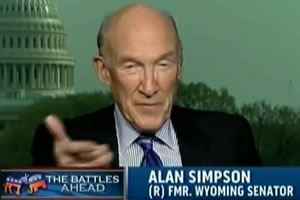
1) "According to former Senator Alan Simpson not only did he not familiarize himself with the relevant life expectancy data during his many years in the Senate, he’s never once brought it up during his months of work on a commission specifically charged with re-evaluating America’s retirement programs."

2) "Landowners are trying to build as fast as they can while the building codes go unenforced. When a new government comes in this summer, everyone thinks that window of opportunity will close."

3) "Ruth-Ellen Brosseau [is] the MP-elect for a French-speaking district outside Montreal. Brosseau doesn’t speak French. She doesn’t even live in Québec. Nor did she make any effort to actually campaign in support of her own election. Apparently, she never even set foot in the district or made a single public statement during the six-week election campaign [and was on vacation in Las Vegas during the campaign]. Nevertheless, she defeated the incumbent Bloc MP by more than 10 percentage points." In fact, on May 7 she finally broke her silence to speak with the press and said that, while she had never been to her district, she "plans to go soon," adding “I’m really excited to come, I’ve heard it’s a beautiful place.”

The Mises Institute kindly tells us how the third could happen:

Wednesday, May 11, 2011

LDS in the Middle East

Growth in membership in the Church of Jesus Christ of Latter-day Saints has been high enough in the region that the Bahrain stake (large group of congregations) was split into two new stakes, one Bahrainian, one centered in Abu Dhabi. Elder Jeffrey R. Holland commented this growth was not from proselytizing Muslims as per the Church's agreement with the national governments, but from influx of members from elsewhere and conversions of other Christians living in the area. Pictured are members in Qatar listening to the apostle when he visited.

At the same time, the US State Department awarded Stephen Beecroft the Diplomacy for Human Rights Award for his work as US ambassador to Jordan in strengthening respect for human rights. Beecroft gives much of the credit to the Jordanians and staff with whom he works, and to his parents and their example of service. A fellow BYU graduate, he also worked as Executive Assistant to Secretaries of State Colin Powell and Condolezza Rice.

Michael Otterman discusses whether we are having another "Mormon Moment" with the probably presidential candidacy of not one, but two Mormons. In short, he says that yeah, we'll probably see a spike in interest, but the long course of growth and people getting to know more members in their daily lives are far more important. The Church is also making freely available an hour long film about the life of founder Joseph Smith, an adaptation from a similar film that relied on a little more background knowledge from the audience.

Monday, April 11, 2011

Comparative Institutions


What is development and capitalist happiness, USSR edition:
When the Soviet authorities during the 1940s exhibited the 1940 movie The Grapes of Wrath as evidence of how miserable the poor were in capitalist America, it backfired.  What amazed the Soviet audiences was that the Joad family fled starvation by car.
A literature review on connections between agriculture, development, and health. Audibert concludes that the link from agriculture to economic growth is well established, but when agricultural projects are carried out they are not always managed appropriately to prevent the spread of diseases. Improving agricultural methods (e.g. integrated pest management) and investing in public goods (health and education) would significantly improve health and development outcomes. It includes a useful and detailed summary table at the end with numerous papers on the subject. Audibert, Martine (2011) “Endemic diseases and agricultural productivity: Challenges and policy response,” presented to AERC Biannual Research Workshop.
 
The World Bank is contemplating turning into a foundation to fund NGOs. I have several reactions. 1) I really don’t think this is the Bank’s comparative advantage. 2) They haven’t had the best track record in picking winning countries. How are they going to pick winning NGOs? 3) If it amounts largely to a greater willingness to work with NGOs, increase funding possibilities, and have an access route to work around governments, there might be some progress … but there’s going to be a lot of devil in those details. 

On institutional innovation and experimentation:
I for one was very surprised that the UN Security Council endorsed military action against Libya. This is big. I suspect the UNSC’s failure to act in Rwanda and the Congo, and to some extent Iraq, played a big role in their decision. That is institutional evolution in action. That makes me hopeful, because I think unified responses and moral authority matter. … On the other hand, if the world threatens and then backs down, or rewards the most thuggish leaders with coalition governments, we could move in the opposite direction.
The tricky thing: however they turn out, we’ll learn very little from the cases of Libya and Cote d’Ivoire. The effects and institutions will emerge over decades rather than years. So not only do we have low accountability, we have bad feedback.

Saturday, March 26, 2011

Big Bag of Libya

The Economist: “WE APOLOGISE for the unplanned hiatus in bombing of the Middle East. Normal service has now been resumed.” … “This president has never been the peacenik America’s doves craved; his scorn for the “dumb” war in Iraq was always balanced by support for the “necessary” one in Afghanistan.”

How much is your non-violence worth?

Potayto, potahto; Tomayto, tomahto; mercenary, military contractor…:
You don't have to be a down-on-your-luck autocrat like Qaddafi or Gbagbo to hire private armies in the modern era, however. The largest customer for the services of private warriors is, without a doubt, the United States, which now employs more military contractors than troops in Iraq and Afghanistan.

Libya’s agricultural sector hires a large number of foreign workers from the neighboring countries. Those migrant workers have been heading home recently to avoid the violence, increasing food and poverty pressures in those countries as well.

“a rebel government, recognized by France, now has an oil company and a central bank.” HT: Blattman. Cowen quips that all they need now is an NGDP futures market.

Seven very good lessons on helping countries leaving autocracy on the road to democracy. In short, institutional reforms and getting the military out of power should happen quickly, followed by building into elections. International forces should largely stand by and focus on institutions and preventing conflict rather than picking winners.

Not appearing on your TV screens: relatively successful, quite peaceful elections in Africa. Given people’s stereotypes of the region, you would think peaceful elections would be newsworthy…

The Daily Show introduces the “Freedom Package” below the fold. Oh dear. HT: Wronging Rights.

Friday, March 25, 2011

Interactive Maps

Interactive third world America in maps: which areas have the highest levels of poverty, unemployment, low health, low education that we associate with low human development index (HDI) scores? My own congressional district scores in the second quintile (that's bad). The neighboring district that includes Ithaca proper is a full quintile ahead of us, largely because school enrollment is much higher and they have many more PhDs.

Mapping poverty, food security, health, and agriculture in Yemen.

Mapping food security programs by country. (HT: Poverty News Blog) You can see, for instance, that 103 of the 104 projects in Haiti work in Port-au-Prince, 20 in the Artibonite, and so forth.

What countries are as productive (total GDP) as Chinese provinces (interactive)? A nice companion to the earlier map updating this for the US. I note that central countries stand out: Middle East, central Asia, and central/Eastern Europe.

Mapping America: see the breakdown of ethnic diversity by census track for anywhere and everywhere in the US. HT: Clark Taylor

Wednesday, March 23, 2011

Libertarians' Responsibility to Protect

Boudreaux points out an inconsistency in modern political thought:
Most modern “liberals” believe that domestic economic problems are caused chiefly by unsavory characters – “business people” – who impose their destructive rule on masses of innocent workers and consumers yearning for more prosperity, and that the best solution to these problems is government force deployed using armies of regulators to subdue these bad guys and to keep close watch over them and their successors.  Failure to intervene is immoral.  These same “liberals,” though, believe that foreign problems are typically the result of complex forces that can be understood only poorly by American-government officials; it is naïve to suppose that even well-intentioned foreign intervention by Uncle Sam will not have regrettable unintended consequences.
Most modern conservatives believe that domestic economic problems are typically the result of complex forces that can be understood only poorly by government officials; it is naïve to suppose that even well-intentioned economic intervention by Uncle Sam will not have regrettable unintended consequences.  These same conservatives, though, believe that problems in foreign countries are caused chiefly by unsavory characters – “dictators” or “tyrants” – who impose their destructive rule on masses of innocent people yearning for more democracy, and that the best solution to these problems is government force deployed with armies of soldiers to subdue these bad guys and to keep close watch over them and their successors.  Failure to intervene is immoral.
He calls such views inconsistent, suggesting that the only consistent and correct view is that it's all much too complicated for naive governments to manage and that any intervention itself is immoral. But it's not the only consistent view in town. The opposite proposition -- that all of it can be dealt with in small pieces as supported by modern academic system that sticks strictly to narrow disciplinary boundaries -- is equally consistent and a shocking number of people believe it more or less.

From a pragmatic standpoint, though, the dominant ideologies may have something to offer. It may really be the case that particular problems in society can be solved better with a little cooperative action (government being only one vehicle of cooperative action) but that outsiders should not go about meddling with other societies about which they know nothing. That's a very defensible proposition. There can be orders of magnitude difference in complexity between the two, and it is perfectly consistent to believe that you shouldn't meddle when things get too complex.

The conservative position (I think more neo-con) views the purpose of government to secure and defend freedom, liberty, and/or democracy. It's not about the complexity of doing so, it's about a moral imperative to preserve our own and others' freedom. That readily conceives of a government that is tamed at home (it's interventions in the market being seen as removing freedom) and a lion abroad in defending or creating freedom somewhere. We can't do everything -- and it's a more than reasonable argument that we're already stretched too thin and doing too much in too many places -- but we should do something somewhere.

My purpose is less to argue that our position on Libya is the right one, or a right one, but that the inconsistency Boudreaux sees is not very inconsistent. Not to the people holding those ideologies, at any rate.

I would also like to point out that libertarian thought is less isolationist than it appears from the above. Consider the example of Thomas Paine, whose views are often claimed by modern libertarianism. Rather than believing that foreign problems were the result of complex forces that could be understood poorly by Americans, he plunged into the fracas of the French Revolution himself, committing his wisdom and words, time and treasury to the relief of those whom he considered an oppressed people. If he is to be a model, the suggestion is not that people from one society cannot and should not meddle in the affairs of others in order to protect, but only that libertarians are wary of letting governments doing so. If some hot-headed young man wants to run off and help the Libyans, why that's his prerogative. He'd just better not try to use my money to do it.

Oh, except that Paine argued that Jefferson, as President, should support the rebels as well. Hm....

Friday, March 11, 2011

Catching Up: Their Riots

More evidence that the riots are not about food: “Since the fall of Mr Mubarak, numerous mini-revolutions have taken place across Egypt. Journalists have overthrown their editors, workers their union leaders, professors their university deans. Even the police have returned to the streets, striking to demand the removal of the senior officers they blame for their disgrace.” The Economist likens them to the 1960s youth revolutions in the West.

Rockwell at Mises addresses the indifference of a segment of the right wing toward the Middle East revolutions. Some right wingers are worried about loss of US influence, as Rockwell points out. I note that his reliance for evidence on Beck and Coulter, both of whom make their living as provocateurs, weakens his case somewhat. It would not have been hard to find neocons who are clear about their priorities and consistent. Many others on the right are worried about whether the revolutions will bring real and lasting freedom while still celebrating the steps that have been taken. Why should it be the case that someone who believes in both freedom and stability cannot worry when one or the other is threatened?

Speaking of freedom, what are the most important parts of governance? According to ngrams, freedom has beaten all other topics hands down for two centuries, though it peaked in the late 1960s. Corruption was a topic of greater interest in the 19th century (#2) than the 20th (#4). Participation and effectiveness took off in the early 20th, but peaked in the 1980s. Transparency, accountability, and the rule of law, however, are the most neglected topics.

CGD proposes a way to nullify the resource curse in the new governments being formed by protest by giving cash grants to citizens and then taxing the money back. “There can be no meaningful representation without taxation. When governments have access to easy money, they have no need to tax and hence no incentive to foster conditions needed for growth and wealth creation. Worse, the surfeit of money gives governments the means to suppress dissent and buy-off political opposition.”

A little known fact about resource curses: “Russia overtook Saudi Arabia as the world’s biggest crude supplier in 2009; OPEC’s share of production has gone from around 51% in the mid-1970s to just over 40% now.”

Tuesday, March 1, 2011

Weight Loss :: Development

It feels hypocritical to write about health and nutrition policies without considering my own policies governing myself. Every so often then I send my internal auditor over to Sparkpeople.com to take an accounting and do some reading on better practices. A guest blogger there shares an excerpt from Dayna Macy's book Ravenous, which has a number of deep thoughts that apply to a wider range of life experiences than weight loss.

Consider these two very different thoughts on the value of measuring and making quantitative the unseen:
Measuring, by its nature, requires me to pay attention to every portion. Measuring forms a container for my longings and boundaries for my lust. Without boundaries, I cannot find balance. Without limits, I cannot hope to be free....


In our culture, the number on the scale enforces a cruel hierarchy. Weight separates the worthy from the unworthy. But the truth is, it's difficult to be in a body, period. Witnessing this in myself and in others, I've begun to see through the delusion so many of us share -- that when we reach a particular weight, we will automatically be happy. 
Measuring is empowering and measuring is enslaving. What is being measured? Why? Does the measurement accurately correspond to the concept we're attempting to measure? Is GDP/capita or the poverty headcount development? Are inputs aid? Is BMI health? Is years of schooling education or square feet per person housing? These are not new questions, but they deserve to be asked and pondered occasionally. As Aid Thoughts brilliantly put it: "The evidence never lies. Unless the synthetic categories we create to compartmentalize and analyze the human world distort or misinterpret the world."

The process of economic development is not easy, in part because it 1) gives us liberty to consider and 2) makes it more imperative that we consider other tensions:
Weight can obscure many things, including lust, sadness, loneliness, anxiety, and anger. As I lose weight and my buffer loosens, I am forced to grapple with these states more directly.
Might the experiences in the Middle East be trying to tell us: "Income poverty can obscure many things, including marginalization, inequality, lack of opportunity, racial and religious tensions, entrenched interests, and poor governance. As economic growth occurs and our constraints loosen, we are forced to grapple with these conditions more directly."

Progress in any area of life, if it is real progress that loosens the constraints that have bound us, forces us to meet other binding constraints that we may not have acknowledged. Personal and economic development is not for the faint of heart.

Thursday, February 24, 2011

Food price controls

I was looking up information on the Kenya maize price controls from last year to find out if they were still in effect. I found several copies of the same article with a headline that really misses the point. The headline is:
Maize Price Controls Rejected
But that's not what the article is about. Farmers petitioned the Kenyan government: if you're going to go around setting prices, the least you could do is tell us what the prices will be before we plant the seed so we can be prepared. The government's answer was that such a policy would be "an utopian market situation" but that's just not how the Real World works. The government has not ruled out setting prices, or making its grain reserves purchasing and selling practices more transparent (though progress has been made in that direction), but has only decided that it will not set prices at the "utopian" timing that would allow economic actors to plan appropriately.


Aid Thoughts featured two anonymous guest posts on the Malawian fertilizer subsidies, neither of which is as robustly positive as most reactions. The first argues that operational efficiency is the wrong metric to use to evaluate the subsidies because mere technical efficiency does not address opportunity costs or sustainability. What else could be done with the same funds (s/he suggests irrigation investment or investment outside agriculture as two possible counterfactuals)? The second also asks to what extent the program is encouraging overall economic growth and movement out of subsistence agriculture. Without lasting growth of some kind, all the gains would disappear should the subsidy be removed the next time there is a financial crisis.

Fairlie has argued that the livestock sector performs an essential role in reducing downward risk for cereal farmers. If farmers have a good harvest, they don't have to worry about prices crashing through the floor because the animals will eat it. This encourages higher average production, lower average grain prices, and less elastic/less volatile grain markets. This function is then a key public good that livestock provide.

Meanwhile, Syria has been increasing cash payments to poor people, reducing prices on basic foods, and introduced a heating fuel subsidy (72%) for public sector workers just days after Tunisia's leader left office.

Friday, February 11, 2011

What Have You Done for Me Lately?

The BBC on the visit of China's foreign minister to Zimbabwe and four other African countries:
The Chinese use of its veto in 2008 was "a landmark diplomatic decision where it basically saved Zimbabwe from punitive sanctions instigated by an irate and sulky former colonial power", the Chinese news agency Xinhua quoted Mr Mumbengegwi as saying.
"So, now this visit will give an opportunity for Zimbabweans to finally thank China for this act," he said.
Schiller on Adam Smith on self-interestedness (HT: Thought du Jour)
Smith also talks about a selfish passion, which is a desire for praise. He argues that people instinctively desire praise, but that, as they mature, this feeling develops into a desire for praiseworthiness. …. He uses that to show that what people really want is to be deservedly praised. And that turn of mind, which develops as people mature, is what makes us into people with integrity. ….
I think this underlies how the economy works. We start out with selfish feelings, which are intermixed with feelings of empathy for others, and then we develop this mature desire to be praiseworthy. I think it is central to our civilisation that people do that.
The Economist on the West's hypocracy: (Aid Watch on the same: one entry, another)
If the West cannot back Egypt’s people in their quest to determine their own destiny, then its arguments for democracy and human rights elsewhere in the world stand for nothing.

Some pictures I liked

Another unposted post, from July, but I'll add to it:

Utopia and dystopia side by side. The future or today? Amazing picture.

History of the Beatles told by their hair.

Daily life in Pakistan in Big Pictures (mostly children).

The protests in Egypt in Big Pictures.

Haiti, one year later, also in Big Pictures.

Friday, January 28, 2011

Unrest: Not Food Riots

Several people posted, and I reposted, that even though the FAO's food price index has reached its old peak, there was very little food-related unrest and explaining why that might be. Some commenters believed we spoke too soon as riots broke out in Tunisia just about that time. They have since spread to several other  countries. Are we getting ready for a new wave of food price riots?

I don't believe so. My primary evidence is that the protesters themselves aren't talking about food and the newscasters aren't talking about food and commentators from those countries aren't talking about food and ... it's just hard to blame food when it seems to be missing from the conversation. Instead, they are about economics (food prices are part of that, but jobs are mentioned more than food) and politics:

Tunisia -- From an interview with a Tunisian (WR)
"So initially, it was a youth movement for economic reform and the creation of jobs... However, this was ultimately the straw that broke the camel's back. ...

Wednesday, September 29, 2010

BIG Bag o Foodie Links

Water

Libya's Great Man-Made River nears completion at $20 billion and 2,333 miles long to connect the 5% of the country with rain to the rest.

What makes water projects work? Social capital, says IFPRI. Water and sanitation committees (cleverly known as WATSANs) in Ghana are not only more likely where communities have other social groups and less likely where communities are ethnically divided, they seem to improve payment for water services and improve water safety. Female leaders seem particularly important.

Food Safety
Powell gives NY Times reporter Bittman's new book two thumbs down for terrible food safety advice: "This is food safety idiocracy. Any food safety advice in Bittman’s book should be disregarded as fantasy."

Powell also found something worse than e. coli and salmonella:a metal staple in his pretzel-filled M&M. "I would rather take my chances with Salmonella or E. coli that I know I can cook to death rather than bleeding internally to death."  Update: Contrition from Mars goes a long way.

Foodie Faddies
Ben and Jerry's has surrendered. They're taking the "All Natural" label off their ice cream because a number of the ingredients are heavily processed (high fructo... I mean, corn sugar, highly processed? you don't say...)

And speaking of corporations, Wilde lets us know that corporate heads are either deluded or lying when they claim that "Personally, I would like to serve a healthier product.  But, if these efforts threaten profitability, I risk getting sued by stakeholders.  Corporations are obliged to pursue maximum profits and no other goal." A recent study of actual court cases says this is not the case.
If one can argue with a straight face that selling healthier food enhances the reputation and long-term prospects of the company, I think that would count as a reasonable business judgment.
Wilde's best line: "Markets are a great game, but a dreadful religion."

Powell urges us to buy local while avoiding "locavore nonsense" by quoting Doering:
buying local makes a good deal of sense when the natural conditions support the seasonal production of good, fresh local food. Who wouldn’t buy our local asparagus in June and fresh sweet corn and tomatoes in August? ...  What is new is the pretentious elevation of this simple idea by the chattering culinary class to the status of a comprehensive creed, which, they assert, can make a major contribution to a more sustainable food system.

I was in a very chic restaurant in Tucson, Ariz. where the smug chef righteously proclaimed that all his ingredients were locally grown. He was quite offended when I asked him about the environmental and other costs of importing all that fresh water to grow that food in the Arizona desert. And how is it more sustainable to deny developing countries the opportunity to export their tropical fruits and vegetables?

And five programs to improve school lunches:
  • Salad bars
  • Healthy vending machines (Cornell nutrition and agricultural economics students occasionally foment for that when gradual changes move the vending machines back to less healthy choices.)
  • Chefs joining the staff or advising kids on healthy eating and food prep
  • School gardens (not without controversy)
  • Buying food from local farmers
Potpourri
Breakfast in Iraq: "At first this weekend I was jealous of my friends in DC enjoying DC brunches.  Then we went to a local hole-in-the-wall and I saw breakfast. ...  After that, I was basically jealous of myself, because the food was so good." 

Tyson is facing a suit for gender discrimination which could jeopardize millions in government contracts if a) it is proved true and b) they don't give 750 female workers backpay and roughly 100 more female applicants jobs. That could cause a significant market power shift. Change.org naturally assumes guilty before proven innocent.

And the FAO is touting small-holder dairy farms. There are presently over 750 million people engaged in it, with an average of two cows. The most interesting and unexpected problem they bring up is environmental: "Low-yield dairy systems in Africa and South Asia are estimated to have higher carbon footprints per 100 kilogram of milk produced than high-yield systems in the United States and Western Europe."

Tuesday, August 17, 2010

Steve McCurry photos

A nice selection of 22 photos from the Middle East and Asia. Two pictures that particularly stood out to me were of Afghani markets, in both cases depicted as sources of light and life.