Showing posts with label Inputs. Show all posts

Friday, July 11, 2014

Lit in Review: Nigerian Agriculture 3

(This post was started October 2011 and never finished. Let's get it out and done.)

Eze, Kwonko, Orebiyi, and Kadiri, "Land Tenure System, Farm Size, innocation, and Agricultural Productivity in South-East Nigeria"

From the abstract: "The laws of inheritance and increase in population led to the subdivision and fragmentation of existing farmland in such a manner that the sizes of farm holdings discouraged agricultural commercialization. ... It was also shown that mechanization of agriculture was impracticable under land fragmentation." They conclude that farmer cooperatives would consolidate fragmented farms, reducing time and energy waste and allowing more modern innovations and mechanization to improve efficiency and production.


Friday, August 24, 2012

Lit in Review: Poverty and Livestock in Eastern Africa

Tsehay and Bauer, "Poverty Dynamics and Vulnerability: Empirical Evidence from Smallholders in Northern Highlands of Ethiopia," presented at the IAAE August 2012.

They study Yetmen and Shumsheha in rural Ethiopia. Between 1994 and 2010, the percent of households owning oxen increased from 5% to 75% and 46% and livestock assets more than tripled in value. Literacy has gone down, but school enrollments are up significantly.

The poverty dynamics are quite interesting. Half of the households are worse off, moving down from subjacent or medial poor to ultra poor (<$0.50/day) and 1/4 moved up - not out-of-poverty up, but up to slightly-less-poor. The worsening happened between 2004 and 2010, while 1994-2004 had seen significant improvement.

Table 5 shows the number of times out of 4 rounds that a household was poor:

          Yetmen             Shumsheha
0          9.8                   6.93
1         27.45                31.68
2         35.29                30.69
3         19.61                24.75
4          7.84                 5.94

Wainaina, Okello, and Nzuma, "Impact of Contract Farming on Smallholder Poultry Farmers' Income in Kenya," presented at the IAAE August 2012.

Their study of 180 smallholder farmers in Nakuru county finds that farmers contracting with Kims Poultry Care Center received roughly 27 percent more revenue per bird than independent farmers. They used matching propensities.

I'm uncertain whether they mean that "KPCC is the only large poultry farm that works with smallholder farmers in Kenya..." or the only one that works with smallholders in a contract that also provides inputs and interlinked credit. Markets for inputs and outputs tend to be quite thin, so partnering with KPCC improves market access significantly. So these results may not be typical of contract farming overall. Oddly enough, independent farmers have statistically larger birds than contract farmers, so the revenue per kg difference is slightly larger. Extension agents and higher education make farmers less likely to sign a contract, so they aren't explaining the difference.

Smallscale farmers have 100-500 birds, medium scale is 500-1000. The county has 40-45% poverty. It sells processed chicken and eggs to local tourist hotels and throughout East Africa.

They regularly reference Nyaga, 2007; poultry sector country review, FAO

Gelan, Engida, Caria, and Karugia, "The Role of Livestock in the Ethiopian Economy: Policy Analysis using a computable general equilibrium model for Ethiopia," also IAAE August 2012.

From the abstract: "We extend an existing dynamic recursive general equilibrium model for the
Ethiopian economy which better models the livestock sector. A separate herd dynamics
module enables us to specify stock-flow relationship, distinguishing between the capital role
of livestock and the flow of livestock products. We also improve the underlying system of
economic accounts, to better capture draft power and breeding stocks." What they look at is growth in total factor productivity (TFP) - how efficient or productive the sector is - comparing a positive shock to TFP growth in livestock, cereals, or cash crops. So imagine you wanted to invest in agricultural productivity in Ethiopia and ask which of those three you should invest in.

They find that an increase in livestock TFP growth from 0.5% to 3.1% would do as much to increase total agricultural GDP as an increase in cereal TFP growth from 2.2% to 4.3%. Livestock TFP growth would also improve export value more than cereal or cash crop TFP growth. Even though domestic prices for livestock decrease, labor income goes up fastest with livestock TFP growth, so the poor benefit the most from livestock TFP growth. Cereal TFP growth improves their caloric consumption by the most.

Thursday, February 16, 2012

Proving I'm Alive: Big Bag of Blogs


Bellemare on Swinnen's paper on who wins and loses from high food prices and on the benefits to rural smallholders of joining marketing chains.

Tabarrok showing me why I should be very, very afraid: Kucinich and co. try a real life enactment of Atlas Shrugged.

Sumner discovers a second career as Bernanke's shrink, showing how his psychology  helps determine the fate of this recession. (If you wanted to be more sensational about it, you could talk about the discovery of the sinister figure in the shadows: Vincent Reinhart. That would be overdoing it a touch.)

The early impacts of AGRA's investment in Ghana, combining fertilizer subsidies, market access, and variable loan structure depending on outcome (essentially removing downside risk).

I was getting ready to run some proper experiments out here, only to learn that my very presence might bias the games. Of course, now this proposes that I need to replicate this (preliminary) finding itself. How general is the result? (HT: Aid Thoughts and Roving Bandit)

Urbanization in Africa is mostly about population growth rather than migration.

Thursday, December 1, 2011

Big Bag of Africa: Agriculture and Millennium Villages

A new paper is out that finds almost zero impact from the Millennium Villages Project. Wanjala and Muradian surveyed Kenyan MVP recipients and their non-recipient neighbors in the district and found that while "the project caused a 70% increase in agricultural productivity among the treated households, tending to increase household income, it also caused less diversification of household economic activity into profitable non-farm employment, tending to decrease household income." To say Clemens cheers would not do his sentiments justice, but Blattman certainly has a more skeptical take on the paper. He shows that there may be a problem with their evaluation strategy, effectively matching away the most important gains. If so, then "MVs actually raise incomes by 10% and assets by a third." The cordial debate between Clemens and Blattman on the latter's blog is impressive and worth reading. (HT: The .Plan that got it from MR, who got it from CGD, which is where I ought to have read it in the first place.)

Record heat in Zimbabwe killed several hundred livestock recently due to lack of water and good grazing land. Climate change is of course suspected to have contributed. The difficulty is in identifying how many cattle would have died had temperatures been just 1 degree Celsius less, or how much more likely this event was as a result of climate change.

In Nigeria, there are increasing tensions between cattle-herders and farmers in Abia as cattle are reported to have destroyed crops worth millions of Naira (tens of thousands of US dollars). Note, the article has a heavy pro-farmer bias.

Closer to my home, a new national government program in Adamawa State hopes to increase farmer yields by 300% with improved varieties of sorghum. The project is led by Prof. Babtunde Obilana, who plans that the government will buy more of the sorghum to use for its school feeding program.

Meanwhile, the LDS Church has a third stake in Port Harcourt. A stake is a group of congregations, and this means that church membership in and around Port Harcourt has grown by around 50% since 2002 when the last stake was created. It is very likely that new stakes will also be formed in Benin City, where the three current stakes have grown to some of the largest in the Church worldwide and could easily be split into 5-6 stakes.

Mozambique's national statistics arm has a new report showing that 99.9% of their agriculture is for subsistence only.

Botswana's government tries to make sure that government subsidies don't go to farms that are not being actively used, a process called black listing. This article discusses blacklisting figures for the last few years and the costs involved.

Friday, November 11, 2011

Mixed Bag: good and bad in African agriculture

In the most distressing news I've heard recently put in a positive light, 20 Tanzanian farmers were invited to Uganda to learn more about using human feces as fertilizer. They would like to convince us that this is a good thing because fertilizer use is so low, but it's also a great way for spreading diseases. Their numbers are 20 years old, but show that a lot more fertilizer is supposedly distributed than was ever spread on crops. That doesn't suggest the problem was lack of fertilizer availability.

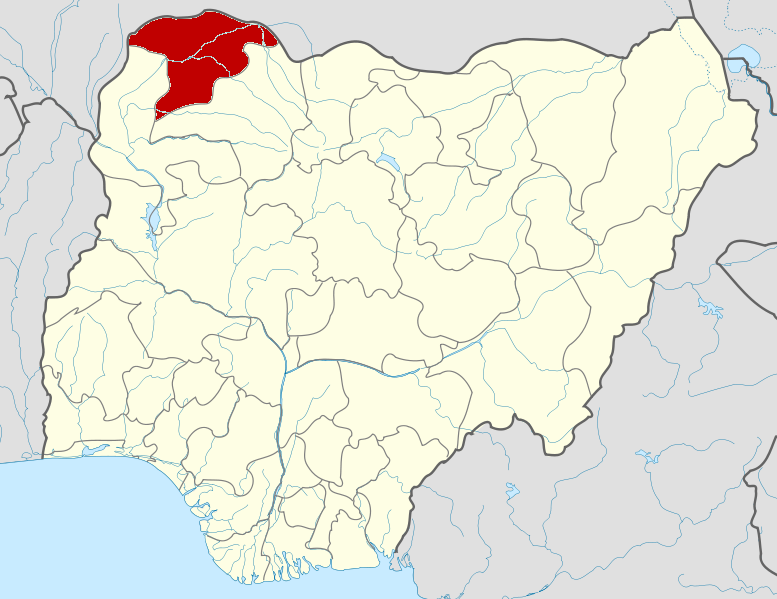
Flooding in northwestern Nigeria (Sokoto state, pictured) destroyed 1 billion Naira worth of crops ($6.7 million).

In much happier news, ICRISAT has been providing some Mali farmers with groundnut (peanut) seeds that take only 3 months to harvest instead of 4. As rain patterns have shifted, assumedly due to climate change, the rainy season has been getting shorter and shorter. If I understand the report correctly, it claims that groundnut production has also increased 10-fold.

They also established a cooperative (starting at 20 members, now 65) to coordinate storage. Each member of the cooperative contributes 20 kg of groundnuts for storage. 10 of them they get back later in the year (as a form of forced storage for behavioral economics reasons) and the other 10 are sold (for about $320) to give the cooperative a source of loanable capital.

Ugandan rice production is up significantly - 66% during the last decade. Instead of importing rice, they now export to South Sudan, Kenya, and DRC. The article credits Nerica (New Rice for Africa) with much of the growth. I take the article to be saying that a new survey by the Ministry of Agriculture claims that rice exports are now valued more than any other traditional food export.

Zimbabwe is going to start handing out agricultural input vouchers to vulnerable farmers this week, entitling them to "10 kilograms of maize seed, one 50-kilogram bag of compound D and one 50 kilogram bag of ammonium nitrate fertilizer."


Monday, November 7, 2011

The price of seeds (and everything else) in Africa

Good news: the prices of cereals, edible oils, sugar, and dairy products were down sharply in October, bringing FAO's food price index down to its lowest point for the year. Not that it's all that low, but it's something. However, peanut butter prices are up 40% in the US, but not abroad (so American expat families everywhere can breathe a sigh of relief). Since the US government shields peanut growers from the world market, the weather in Georgia and Alabama matters for the US price, but not the international price.

Swaziland's government has retracted its usual agricultural input subsidies: no more discount or free seeds, no more discount tractors (government was charging $17.30/hr rental; private cost is $26.60). The article also discusses how the feudal land tenure system makes things more difficult. One farmer laments:
“I live on the banks of a river [the Nkomati]. My maize crops could easily thrive if I had a simple pump and piping. What I harvest would pay for the loan, but I have no collateral because there is nothing to offer the bank" [because he does not own the land and so can't put that up as collateral.]
Roving Bandit notices the South Sudan National Bureau of Statistics report: annual inflation in South Sudan is up to 60% from September 2010 to September 2011. For the year, the biggest contributor is food prices that went up 64%. The price of furniture and furnishings went up far more (108%) as did alcohol (95%), but food carries a much larger weight (71/100) in the basket of goods than anything else. Food price increases have been very small this month, thankfully.

Thursday, October 13, 2011

Big Bag of Africa: Statistics, Governance, and Food

Shanta at the World Bank discusses the importance of good statistics to understanding what goes on in Africa:

Today, only 35 percent of Africa’s population lives in countries that use the 1993 UN System of National Accounts; the others use earlier systems, some dating back to the 1960s. To show that this is not an arcane point, consider the case of Ghana, which decided to update its GDP last year to the 1993 system.  When they did so, they found that their GDP was 62 percent higher than previously thought.  Ghana’s per capita GDP is now over $1,000, making it a middle-income country. ... 
Only 11 African countries have comparable data for the same year. For the others, we need to extrapolate to 2005, sometimes (as in the case of Botswana) from as far back as 1993.
In short, even the economists’ celebratory estimate of poverty declining in Africa during a period of growth needs to be taken with a grain of salt.  In reality, there are many countries for which we simply don’t know.
What’s going on here?
The vice president of Zambia, Guy Scott, is, to not put too fine a point on it, white. Jayawardane argues that this will be most surprising to people who believe African countries are primarily divided along ethnic and tribal lines. For Zambians and many other countries, however, status and occupation are much more important dividing lines.

A very vocal critic of Nigeria's government, Richard Dowden, was invited to speak to the government. He reports his shock at seeing Pres. Jonathan nodding and smiling encouragingly as he and other speakers described what was wrong in the government, including being the highest paid government in the world. His assessment of the president is cautiously optimistic, though he also still has some real questions.
My impression of President Goodluck Jonathan is that he is Nigeria’s first intellectual president – a laid back former academic who wants to walk round a problem before deciding what to do about it. He likes to listen and ask questions – taking his time to understand and reframe the problem.
In other news, nearly half of Zambia's maize production got soaked during the rains last week. While it does not have to be destroyed - the government is optimistic it will dry oat - it may well decrease the amount of maize for human consumption that would have been available after another bumper harvest.

Ghana is providing northern farmers with 110 combine harvesters as part of its agricultural subsidy programs that currently lower the price on 100-150,000 tons of fertilizer.

Banana wilt has already wiped out 20% of the crop in one Ugandan district and is threatening nearly all the rest. This is an area where bananas/plantains are a major staple food.

World Food Prize 2 - a few short summaries


Howard Buffett keynote address:
“We cannot solve other people’s problems, no matter how much we spend.”
I like technology. It is an important solution, but it is not and cannot be the only solution.
Soil is more important than seed. You cannot correct low soil fertility by piling on chemical fertilizers. Our high-tech solutions promote monocropping, which isn’t good. None of the poorest farmers have had a soil test done, so we’re guessing at what their soils need. Dead soil has no biological activity: fertilizer is like putting oxygen mask on a deadman.
Farmers are willing to take risks on seed. They buy unmarked bags and unmarked cans because they are cheaper.

Secretaries of Agriculture panel
Ghana – fertilizer subsidies and mechanization are the future.
Mozambique – 4 pillars to increasing agricultural productivity: extension, markets and information, natural resource management, and public-private partnerships. Discussed comparative advantage of different zones of Moz and the need to support farmers in their comparative advantages. We are developing new exports, like cashews.
Q: Tanz and Moz – how are you going to avoid monocropping in your focus on corridors and comparative advantages?
A Moz: We are using crop rotation. We aren’t subsidizing other crops, but we subsidize fertilizer and encourage farmers to compost as well. “But don’t worry” we’re also building a phosphate factory.
A Tanz: Don’t only grow one crop – grow other crops in the same season as well.

Sheeran (WFP)
Farmers in many poor countries reduced production during food price crisis because input prices rose faster than food prices.
Asked a market trader how he set prices. “It’s easy. I go online every morning and find the price on the Chicago markets and give a 10% discount – we are a poor nation, after all.”
Using an analogy from IT – where you use some of your computer capacity to ensure the stability of the rest – what investments and inefficiencies do we need to make/accept in order to get the rest of our food production more stable? Ex: Could WFP reduce dependence in South Sudan down the line by buying food there, even though it is more expensive than in neighboring countries?
When leaders say “not on my watch” it is powerful. It gives accountability.

Monday, August 15, 2011

Stewards of the Earth

On GMOs, Roman Catholic bishops in Kenya are credited with "taking a new stance," and though it's only a small switch it's surprising to me how many people are against it. What's the new stance? If you're going to starve to death because of famine, it's really much better to eat genetically modified food than to die. ... I know, what was the policy before? Death before GMO? And there are people against this!? I think we need to call in Jon Stewart for this one.


On "over"population, I wish there were far more people arguing that babies are not the problem. Here is one argument from Yglesias:
It’s especially mistaken, I think, to try to look at children as a negative environmental externality. The beginning of wisdom here is to note that pollution isn’t “bad for the planet.” The planet is a gigantic roughly spherical chunk of rocks that can easily survive whatever level of greenhouse gas emissions or whatever else we care to pump into the atmosphere. The big picture ecological threat is a threat to human beings, and to the continued existence of ecological conditions that are conducive to human flourishing. Radical population reduction would sharply reduce the quantity of anthropogenic ecological impacts, but to what end? The goal needs to be to reconfigure human activity in order to make it sustainable over a longer time horizon. But sustained human flourishing requires both acceptable levels of ecological impact and also the continued production of new human beings.
On the lowered and falling prospects for jatropha, a new report by Wu and Kant addresses the Indian and Chinese largely failed plans:
It appears to be an extreme case of a well intentioned top down climate mitigation approach, undertaken without adequate preparation and ignoring conflict of interest, and adopted in good faith by other countries, gone awry bringing misery to millions of poorest people across the world. And it happened because the principle of “due diligence” before taking up large ventures was ignored everywhere. As climate mitigation and adaptation activities intensify attracting large investments there is danger of such lapses becoming more frequent ...
On the land grab, there is a new film out attacking the primary banana corporation in Cameroon. Among the interesting political economy issues:
"If you look at the congressman of the region, he is also the director of public relations of the company, the minister of trade of Cameroon is also president of the board of directors of the company."
An interesting paper showcases informal seed exchange between farmers for preserving seed diversity in Mozambique following a disaster. They argue food aid should include local seed varieties as part of the package to speed diversity recovery following a disaster.
The research established that nearly 90% of the farmers in the affected areas received cowpea relief seed immediately after the back-to-back calamities. Two years after, only one-fifth of the recipient farmers were still growing the seeds, while more than half sourced their seeds from markets. However, this did little in restoring cowpea diversity in the affected communities as the seeds bought by farmers from the market were mostly uniform, coming from other districts that grew just one or a few select varieties. 
On the other hand, about one-third of the affected farmers obtained seeds from friends and relatives living within the same or neighbouring localities to restock their farms – the same people that they have been exchanging seeds with prior to the disasters. This practice was the main reason why cowpea diversity was restored in these areas, the study showed.

Tuesday, June 14, 2011

Microinsurance in Kenya

An initiative provides crop insurance to 22,000 Kenyan farmers via cellphone and solar-powered weather stations, making it the largest on the continent. It is financed in part by Syngenta and the IFC. Note, this is mostly a press release disguised as a news article:
Each farmer who buys insurance is linked to the nearest weather station — no one is more than 20 kilometres from a station. If the weather station shows that the rainfall was insufficient early in the growing season, or too much late in the corn season, all the farmers in that area get an automatic payout — farmers do not have to file a claim.
If the rainfall was only slightly off, farmers get a small payment. If the weather was extreme enough to destroy their whole harvest, they get the full amount. No farm visits are necessary. … The shop owner is given a camera phone to record the purchase, which instantly sends a confirmation text message to the buyer. At the end of the growing season, payouts go electronically to the farmer’s cell phone account. It is remarkable that even for small farmers, text messaging and online banking are old friends that provide a comfort level with a new programme. The programme uses the M-Pesa money transfer system.

The biggest cost is sending the text message welcoming the new client. … [DW - I have to think this is a joke because a little later it says] Forty per cent of the project’s budget goes to pay for trainers who work with farmers, a telephone help line and radio programmes about insurance. Kilimo Salama expects that this expense will drop as the product becomes more familiar. It aims to be commercially viable in three years.
More on the difficulties of providing microinsurance below the fold. Or you can read about ILRI's similar program here or watch a video.

Friday, June 3, 2011

Big Bag of Africa: Malawi politics, Rwandan agriculture, S. Sudan constitution

Malawi’s politics used to be highly geographic, with each third of the country focusing on one primary party. Between 2005 and 2009, that picture changed dramatically:


The DPP party gained an enormous following, enough that some people have started worrying about single-party democracy. Matt at Aid Thoughts postulates the primary reason for the great upswelling of unity is the national fertilizer subsidy. During the election, parties differentiated themselves mostly be claims of how they would apportion subsidy money. Since DPP had already shown how it (relatively) evenly distribute the money, they were a known entity. Now, is this vote buying, or demand-responsive democracy, or political entrepreneurship, or rampant socialism, or something else altogether?

One of my most-consistently-visited posts dealt with Rwandan agricultural growth prospects being potentially oversold. In the meantime, growth has been good and better than the regional average for five years. Hansl believes the way forward is to invest in irrigation, integrated fertilizer management, diversification of ag products, and most controversially get out of smallholder agriculture:
The relatively high level of land productivity reflects the favorable agro-climatic potential resulting in two harvest seasons, as well as the intensive nature of the predominant agricultural production systems. In contrast, labor productivity remains low compared to these countries, albeit increasing over the last decade. This is related to the fact that Rwanda has the highest proportion of rural population, most of them engaged in labor intensive agriculture. It appears that most opportunities for future productivity gains lie in the area of making agricultural production less labor intensive, in other words less subsistence based.
I commented earlier that the Rwandan hills will make mechanization somewhat difficult.

Comments on South Sudan’s temporary constitution. Primary concerns: it doesn’t say just how temporary, nor how the new process will be more transparent and participatory, nor if there will be term limits which the vice president had spoken in favor of. (HT: Roving Bandit)
Vaguely on the subject of African geopolitics, below the fold is a map of energy connections between African states:

Thursday, June 2, 2011

Big Bag of Food Policies: Farm Bill, Seeds, and Antibiotics

Elliott calls on budget cutters to not only cut the direct farm payments from the next Farm Bill – intended as a bridge away from trade-distorting policies that never got off the ground – but also from the trade-distorting subsidies that still exist. And shocking as it is for me to agree with my former Sentaor Feinstein, do so I must:
Oh, and Congress could save another $3 billion this year and $6 billion in future years by voting to eliminate the subsidy for ethanol as proposed by Senators Dianne Feinstein (D-CA) and Tom Coburn (R-OK). Senator Tom Coburn (R-OK) rightly calls it “bad economic policy, bad energy policy and bad environmental policy.”
FAO and the African Union have teamed up to create a Forum for Africa Seed Testing to speed up seed policy harmonization and promote seed markets. Guei, an FAO senior officer, indicates that “Inadequate supply of quality seeds for both food and cash crops is one of the biggest bottlenecks to food production on the continent..."

Loglisci (HT: Wilde) reminds us that Denmark has been using antibiotics in livestock only when needed by illness – rather than keeping all animals constantly under a mild dose of antibiotics as we do in the States – for a number of years. As a result, they use a lot fewer antibiotics and they have had less trouble than we have from the growth of antibiotic-resistant superbugs. This hasn’t prevented increasing use of antibiotics as hog population has grown (see chart), but it is far lower today than it was at peak and lower still than it would have been without the law.

Thursday, April 28, 2011

Simple Development Stories vs. Reality

The differences between what we want to do, what we are good at, and what we [maybe] need to do. (HT: Barder, Source)

 We’ll never really be free of simplistic development stories. But at least that means the rest of us can have jobs adding another layer of reality to the debate: No, Malawi’s fertilizer subsidies are not simply a glorious story of an African government bucking “the Man.” IMF austerity programs also made the fertilizer subsidies possible.
Zambia continues its fertilizer subsidy program and is encouraging a Russian firm to build a new fertilizer plant to help them do it.
Saudi Arabia in Ethiopia ($2.5 billion for rice) and Zambia ($125 million for pineapple): “Saudi Star plans to export 2/3 of the food it will grow on the Ethiopian land…” The Saudi government announced this year that there are 27 other countries in whose agriculture it hopes to invest.

Hungry families turning down a free lunch. “When India was poor, its failure to feed itself properly did not seem odd. Poverty was explanation enough. But after one of the most impressive growth spurts in history, the country’s inability to lift the curse of malnutrition has emerged as its greatest failure—and biggest puzzle. … Astonishingly, a third of the wealthiest 20% of Indian children are malnourished, too, and they are neither poor nor excluded.” After complaining that Indian plans to reduce hunger are insufficient given the structural and bureaucratic difficulties, however, the Economist’s answer of turning the program into a CCT that wouldn’t address them either seems odd.

Why? Try Banerjee and Duflo's explanation: "The poor often resist the wonderful plans we think up for them because they do not share our faith that those plans work, or work as well as we claim. We shouldn’t forget, too, that other things may be more important in their lives than food."

Easterly asks, Why are we not concerned about the brain drain in North Dakota? I don’t know where he was during the previous gubernatorial election, but in the great state he and I share the brain drain out of New York State was a major debating topic. While it’s true no one proposed putting a wall around the state to keep people in, it was still a topic of concern.

Thursday, March 17, 2011

How to recognize unfavorable labor laws

Labor laws in Brazil. One law bans paying an employee less one month than the previous month.
That many of the new jobs are formal (ie, legally registered) is despite, rather than because of, the labour laws. The trend to formalisation is largely a result of the greater availability of bank credit and equity capital on the one hand, and recent changes that make it easier to register micro-businesses on the other. …
Gustavo Gonzaga, an economist … notes that a remarkable one-third of Brazilian workers are made redundant each year, a fact he attributes in part to the labour laws themselves. These are extraordinarily rigid: they prevent bosses and workers from negotiating changes in terms and conditions, even if they are mutually agreeable. They also give workers powerful incentives to be sacked rather than resign. Generous and poorly designed severance payments cause conflict, Mr Gonzaga says, and encourage workers to move frequently. That churn affects productivity, as employers prefer not to spend on training only to see their investment walk away.
Private enterprise and capital laws in China: “behind China’s remarkable success has been an odd and often unappreciated experiment in laissez-faire capitalism.”
The right of China’s private companies to exist is by no means clear. Private companies with more than eight employees began to emerge only in 1981 and were not officially sanctioned until 1988 (the number was drawn from an essay by Karl Marx on an inflection point for the creation of a rentier class); …
No one knows quite how much private companies contribute to China’s fast-growing economy. Chinese firms fall into a bewildering variety of legal categories and their respective contributions to GDP are not reported in official statistics. …
Zhejiang’s scrappy entrepreneurs had already acquired, in the least auspicious circumstances, a culture of opportunity and a belief that anyone could become successful. The anecdotes are almost endless. … [They appear to include a healthy dose of microloans and pay day loans since the] sources [of Chinese capital] are a bit of a mystery: largely unofficial, even secretive … discerning, vibrant, and (depending on the authorities’ sentiment of the moment) even illegal. … The system is entirely informal. Records, he says, are minimal and all investments are in cash. A by-product is a proliferation of vast steel safes in homes and offices. … Although success brings praise, too much of it can invite envy and scrutiny.
And the increasingly antagonistic agricultural labor laws in the US:
This is how our relatively inexpensive food gets to us.   The costs, as the economists tell us, are externalized.  Here is one of those externalized costs–the potential of those kids to become functioning citizens in our democratic society.

Big Bag of African Agriculture

Fair trade coffee in Uganda, which liberalized coffee export in the 1990s: Prices remained low initially, leading to reduced supply and quality. Organizers of a free trade initiative with 7500-15000 farmers claim that they have known how to produce high quality coffee but haven’t had incentives. The price premium is roughly 25% plus investment in community public goods.

Also in Uganda: mud quarries. “what we get is a fascinating portrait of a village doing the best it can with an informal land system, yet obviously still in need of some sort of formality.” The mud is a valuable building material locally.

South Africa plans that agroprocessers will add 500k jobs over the next ten years and are providing capitalization funds. The funds are coming from the court payments required of Pioneer Foods for collusion and price-fixing. The government also hopes to increase the number of smallholder farmers from 200k to 250k by providing training and extension services. Employment in agriculture and agroprocessing has been declining.

Zambia’s president is not predicting turmoil from the north spilling in, crediting good multiparty elections for his confidence.

Learning African English via Wikipedia

FAO estimates that if rural women had equal access to land, technology, financial services, education, and markets , agricultural production could increase enough to feed an additional 100-150 million people, 12-17 percent of the world’s total. Diouf has called for equality as a means to “win, sustainably, the fight against hunger and extreme poverty.” Again, the question is if we pursue equality as a right, or because it is morally right, or because it pays us to do so.

On the infrastructure constraints in African agriculture:
Statistics indicate that only 34% of sub-Saharan Africa’s rural population lives within two kilometers of a paved road. In most of Africa, poor road infrastructure accounts for investors deciding to look elsewhere. “Every fifth African needs at least five hours to get to the nearest market….” Beavogui says.
Reasons to be optimistic about Africa, video below the fold. Among the interesting points he makes is that vehicle operating costs in Africa are no higher than in price, but the prices to put goods on ships are the highest in the world. Only 1% of the money allocating for non-wage health support actually gets where it was intended. Yes, this is why he is optimistic. It means that there are obvious problems that can be readily solved. As a result, implementing some simple remedies reduced Rwandan child mortality by 33%.

Thursday, February 24, 2011

Food price controls

I was looking up information on the Kenya maize price controls from last year to find out if they were still in effect. I found several copies of the same article with a headline that really misses the point. The headline is:
Maize Price Controls Rejected
But that's not what the article is about. Farmers petitioned the Kenyan government: if you're going to go around setting prices, the least you could do is tell us what the prices will be before we plant the seed so we can be prepared. The government's answer was that such a policy would be "an utopian market situation" but that's just not how the Real World works. The government has not ruled out setting prices, or making its grain reserves purchasing and selling practices more transparent (though progress has been made in that direction), but has only decided that it will not set prices at the "utopian" timing that would allow economic actors to plan appropriately.


Aid Thoughts featured two anonymous guest posts on the Malawian fertilizer subsidies, neither of which is as robustly positive as most reactions. The first argues that operational efficiency is the wrong metric to use to evaluate the subsidies because mere technical efficiency does not address opportunity costs or sustainability. What else could be done with the same funds (s/he suggests irrigation investment or investment outside agriculture as two possible counterfactuals)? The second also asks to what extent the program is encouraging overall economic growth and movement out of subsistence agriculture. Without lasting growth of some kind, all the gains would disappear should the subsidy be removed the next time there is a financial crisis.

Fairlie has argued that the livestock sector performs an essential role in reducing downward risk for cereal farmers. If farmers have a good harvest, they don't have to worry about prices crashing through the floor because the animals will eat it. This encourages higher average production, lower average grain prices, and less elastic/less volatile grain markets. This function is then a key public good that livestock provide.

Meanwhile, Syria has been increasing cash payments to poor people, reducing prices on basic foods, and introduced a heating fuel subsidy (72%) for public sector workers just days after Tunisia's leader left office.

Thursday, September 30, 2010

Big Bag o African Blog Links

So there's a plan for communities in Southern Sudan to arm their young men so they can fight off the LRA when it comes to town. Wronging Rights' poll on "what should I be yelling as I tear out my hair" is delicious.

The  Ask Your Government initiative asked governments where the development money goes. Researchers then measured how responsive governments were to the requests. Podcasts are available for the responses from Uganda, Kenya, Zambia, Malawi and South Africa. The relative winners in SSA are Egypt, Ghana, Uganda, Kenya, Zambia, Namibia, Botswana, and South Africa. South Africa was as forthcoming as the US, England, France, and New Zealand or more so.

WalMart in Africa, a hopeful perspective.

Social entrepreneurs protecting Kenyan topsoil by encouraging the growth of micro-forestry:
After each harvest cycle, KOMAZA processes the lumber from farmers' trees into a variety of products including firewood, electricity poles, sawn lumber and even luxurious floorboards. The company then sells the products on markets that would normally be completely inaccessible to smallholder farmers. KOMAZA projects that each microfarm will return over $3,000 to each family at the final harvest, a huge sum for families accustomed to living on less than $300 a year.
Happy belated 50th birthday, Mali. Fun song.

Would Obamacare cover this traditional doctor's services? Everything from diabetes and TB to not being liked at work, bad luck, STDs, and court cases.

Kraft is encouraging Ghanian cocoa farmers to become fair trade certified.

A less than positive piece on Zimbabwe's land reform at machete point. Best quote from the Southern African Confederations of Agricultural Unions research report cited in the article: "tenure reform is more important than land reform in many countries." It applies this to Zimbabwe's and South Africa's very different land reform systems.

Wednesday, September 29, 2010

Conspiracy Theory of the Day

Lex Luthor is responsible for both the financial crisis and the African land grab! More details on the first here. Once you realize the first and why, the second becomes obvious.

Friday, September 24, 2010

Meanwhile in Zimbabwe


Godfrey Marawanyika tells about one Zimbabwe's successful new farmers. Around 2000, Mugabe seized the land of many white farmers and passed it out to some of his more clearly African constituency. The article has a fascinating schizophrenia of a tale in three parts: that one farmer's success, the overall perceived failure of the plan, and hence a dual picture of Mugabe as folk hero and corrupt tyrant. The racial comments are also worth reading. Here are excerpts of these points:

To get him started, a neighbouring white farmer lent him a tractor to prepare land to grow maize and tomatoes and in time he tried tobacco farming. The white farmer declined to be interviewed, but Mhembere said the gesture put him on a path toward success, placing him among a new generation of farmers who increased Zimbabwe's tobacco output for the first time in eight years. ... [Production is currently half what it was in 2000]

Mugabe said the scheme was needed to correct the legacy of colonialism, but the reforms were marred by deadly political attacks against farmers, who saw their land turned into militia bases for ruling party attacks on the opposition. Hundreds of thousands of black farm workers on white farms were forcibly evicted, while Mugabe's top aides seized prize farmland. Small farmers like Mhembere were often left with little support to finance their operations. Production of both food and cash crops like tobacco plunged, leaving Zimbabwe dependent on food aid and drying up foreign currency reserves.

For nearly a decade, government failed to help the resettled farms use their land effectively with a select few benefitting from handouts from the central bank, while their meagre incomes were ravaged by hyperinflation....

It remains to be seen if Zimbabwe's farms are solidly on an upward trend, but Mhembere says land reforms were among the best policies Mugabe adopted since independence from Britain in 1980. 
"If ever President Mugabe did anything for the majority in this country it is the land reform which is real empowerment for blacks. Land reform is about sharing, land reform was never about chasing whites. The problem is that some of the whites did not want to share."
Meanwhile, Mugabe and 80 person, $2 million, entourage arrived at the UN MDG Summit to declare US/EU sanctions were preventing them from achieving the poverty and hunger goals and claim that they are doing very well at meeting the education and HIV goals.

Wednesday, September 1, 2010

Omnivore's Delusion

Reaching into my stack of unread papers, I pull out Blake Hurst, a Missouri farmer who has a different opinion about the current state of Western agricultural practices than many armchair food policy "analysts," who, he says
does not blame witchcraft for a bad quarter, or expect the factory that makes his products to use steam power instead of electricity, or horses and wagons to deliver his products instead of trucks and trains. But he expects me to farm like my grandfather, and not incidentally, I suppose, to live like him as well. He thinks farmers are too stupid to farm sustainable, too cruel to treat their animals well, and too careless to worry about their communities, their health, and their families. ... He is an expert about me on the strength of one book....
So he presents a very different view of what organic and industrial farming looks like to dispel common myths and stereotypes.
The results of organic production are so, well, troublesome. ... molds, fungus, and bugs increase.... Some of the largest farms in the country are organic -- and are giant organizations dependent upon lots of hired stoop labor doing the most backbreaking of tasks in order to save the sensitive conscience of my fellow passenger the merest whiff of pesticide contamination. They do not spend much time talking about that at the Whole Foods store.

The most delicious irony is this: the parts of farming that are the most "industrial" are the most likely to be owned by ... family farmers.... Most livestock is produced by family farms, and even the poultry industry, with its contracts and vertical integration, relies on family farms to contract for the production of the birds....
He makes a number of points about attempts to make livestock raising more "humane." Turkeys that are "range fed" are prone to weasel attacks and they don't come in when it rains, just stare up at the rain with their beaks open until they drown. Chickens are kept in separate cages to prevent their pecking at, wounding, even killing each other to establish the pecking order. Pigs are penned in tight cages (outside of CA which has outlawed them) because the larger wooden crates lead to certain problems, like pigs laying down on their offspring killing them:
Farmers do not cage their hogs because of sadism, but because ... being crushed by your mother really is an awful way to go. As is being eaten by your mother, which I've seen sows do to newborn pigs as well. ...

Norman Borlaug, founder of the green revolution, estimates that the amount of nitrogen available naturally would only support a worldwide population of 4 billion souls or so. He further remarks that we would need another 5 billion cows to produce enough manure to fertilize our present crops with "natural" fertilizer.
He addresses the practical difficulties he has experienced of clover and legume production, including freezing rain, increased bug growth, and using twice as much water and land to grow the same amount of corn. Pollan proposed a program of mandatory urban composting that could be trucked to the farms to provide green manure. Hurst's calculations show that would amount to 5 million truckloads to fertilizer just the US corn crop. "Now, that would be a carbon footprint!"

He closes with a plea to listen to farmers and try to understand why they make their choices.