Showing posts with label Disaster. Show all posts

Friday, November 11, 2011

Mixed Bag: good and bad in African agriculture

In the most distressing news I've heard recently put in a positive light, 20 Tanzanian farmers were invited to Uganda to learn more about using human feces as fertilizer. They would like to convince us that this is a good thing because fertilizer use is so low, but it's also a great way for spreading diseases. Their numbers are 20 years old, but show that a lot more fertilizer is supposedly distributed than was ever spread on crops. That doesn't suggest the problem was lack of fertilizer availability.

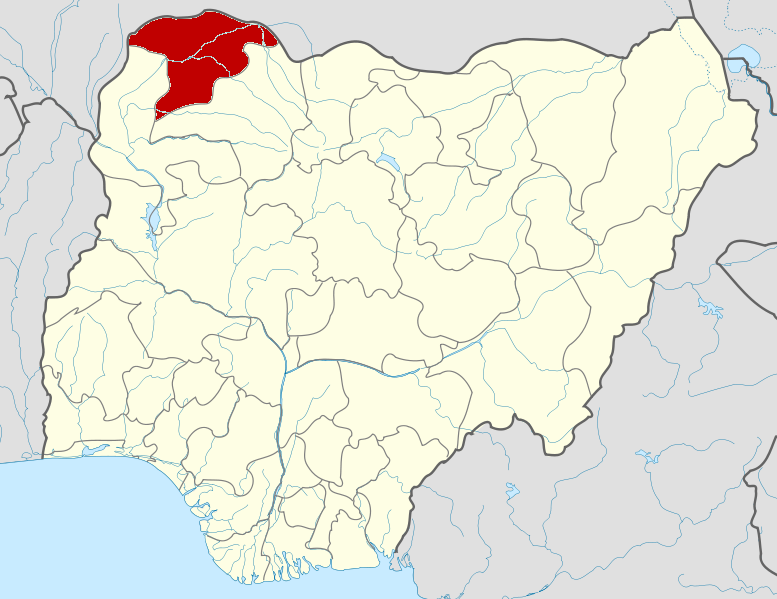
Flooding in northwestern Nigeria (Sokoto state, pictured) destroyed 1 billion Naira worth of crops ($6.7 million).

In much happier news, ICRISAT has been providing some Mali farmers with groundnut (peanut) seeds that take only 3 months to harvest instead of 4. As rain patterns have shifted, assumedly due to climate change, the rainy season has been getting shorter and shorter. If I understand the report correctly, it claims that groundnut production has also increased 10-fold.

They also established a cooperative (starting at 20 members, now 65) to coordinate storage. Each member of the cooperative contributes 20 kg of groundnuts for storage. 10 of them they get back later in the year (as a form of forced storage for behavioral economics reasons) and the other 10 are sold (for about $320) to give the cooperative a source of loanable capital.

Ugandan rice production is up significantly - 66% during the last decade. Instead of importing rice, they now export to South Sudan, Kenya, and DRC. The article credits Nerica (New Rice for Africa) with much of the growth. I take the article to be saying that a new survey by the Ministry of Agriculture claims that rice exports are now valued more than any other traditional food export.

Zimbabwe is going to start handing out agricultural input vouchers to vulnerable farmers this week, entitling them to "10 kilograms of maize seed, one 50-kilogram bag of compound D and one 50 kilogram bag of ammonium nitrate fertilizer."


Monday, August 15, 2011

Stewards of the Earth

On GMOs, Roman Catholic bishops in Kenya are credited with "taking a new stance," and though it's only a small switch it's surprising to me how many people are against it. What's the new stance? If you're going to starve to death because of famine, it's really much better to eat genetically modified food than to die. ... I know, what was the policy before? Death before GMO? And there are people against this!? I think we need to call in Jon Stewart for this one.


On "over"population, I wish there were far more people arguing that babies are not the problem. Here is one argument from Yglesias:
It’s especially mistaken, I think, to try to look at children as a negative environmental externality. The beginning of wisdom here is to note that pollution isn’t “bad for the planet.” The planet is a gigantic roughly spherical chunk of rocks that can easily survive whatever level of greenhouse gas emissions or whatever else we care to pump into the atmosphere. The big picture ecological threat is a threat to human beings, and to the continued existence of ecological conditions that are conducive to human flourishing. Radical population reduction would sharply reduce the quantity of anthropogenic ecological impacts, but to what end? The goal needs to be to reconfigure human activity in order to make it sustainable over a longer time horizon. But sustained human flourishing requires both acceptable levels of ecological impact and also the continued production of new human beings.
On the lowered and falling prospects for jatropha, a new report by Wu and Kant addresses the Indian and Chinese largely failed plans:
It appears to be an extreme case of a well intentioned top down climate mitigation approach, undertaken without adequate preparation and ignoring conflict of interest, and adopted in good faith by other countries, gone awry bringing misery to millions of poorest people across the world. And it happened because the principle of “due diligence” before taking up large ventures was ignored everywhere. As climate mitigation and adaptation activities intensify attracting large investments there is danger of such lapses becoming more frequent ...
On the land grab, there is a new film out attacking the primary banana corporation in Cameroon. Among the interesting political economy issues:
"If you look at the congressman of the region, he is also the director of public relations of the company, the minister of trade of Cameroon is also president of the board of directors of the company."
An interesting paper showcases informal seed exchange between farmers for preserving seed diversity in Mozambique following a disaster. They argue food aid should include local seed varieties as part of the package to speed diversity recovery following a disaster.
The research established that nearly 90% of the farmers in the affected areas received cowpea relief seed immediately after the back-to-back calamities. Two years after, only one-fifth of the recipient farmers were still growing the seeds, while more than half sourced their seeds from markets. However, this did little in restoring cowpea diversity in the affected communities as the seeds bought by farmers from the market were mostly uniform, coming from other districts that grew just one or a few select varieties. 
On the other hand, about one-third of the affected farmers obtained seeds from friends and relatives living within the same or neighbouring localities to restock their farms – the same people that they have been exchanging seeds with prior to the disasters. This practice was the main reason why cowpea diversity was restored in these areas, the study showed.

Thursday, May 5, 2011

LDS in Japan and elsewhere

One LDS missionary’s experience in the Japan quake:
For his part, Hiltbrand is itching to get back to the disaster zone.
“I really want to be in Tagajo helping people,” he says. “I have many friends in Tagajo and I don’t know how they are. I don’t know how they will clean it all up and I want to help.” ...
For example, under the direction of Branch President Brad Brough, members in Misawa donated food and warm blankets to those in need in nearby Hachinohe. Elder Holland [right] said that kind of caring is happening in wards and branches across the country.
MSNBC also praised Church efforts in Japan to supply aid, locate all members and missionaries, and prepare its people for just such emergencies so they can take care of each other and their communities.

Archeologists uncover 70 lead plates that COULD be authentic and, IF SO, COULD be quite significant as 1st century commentary on the resurrection and other Christian topics. IF they are what they appear to be, it would be another instance of people recording religion on metal plates, a phenomenon discovered in a number of places after Joseph Smith discovered the Book of Mormon on golden plates. At the time, the claim was that since no one had ever found metal plates before, the entire thing must be a hoax. Now that we know it was common, the claim is that there is no archeological evidence in favor of the Book of Mormon.

This year, the Church of Jesus Christ of Latter-day Saints’ Welfare Program turns 75. They are encouraging members everywhere to engage in a day of service this year to celebrate.

The Vietnamese governments’ comments on the LDS Church

The Africa West area of the church will be introducing internet access to many of its offices, about 64 locations.

Thursday, April 7, 2011

Economists' Unusual Ethics

“If you think government should get off our backs and encourage self-reliance – for moral reasons of course – you probably think cutting it will be good for the economy too.
If you think the government should help people more, you probably also think with uncanny conformity that this would be good for economic growth.
Whatever our morality, it’s efficient. Funny that.
Speaking of economists’ unusual morality, here are the number of deaths per terawatt of energy. If nuclear still scores as well next month, the suggestion (to economists) will be that we aren’t killing enough people via nuclear and killing far too many by coal. Of course, we also aren’t killing enough people with wind and water power .

On the economics and ethics of red light cameras (they give you a ticket if you drive through a red light). The economic incentive for the companies running them is to have a shorter yellow signal so they catch more people. That also leads to more accidents and fatalities, even though the cameras are designed to reduce accidents by getting more people to not speed through.

Those stories are about economics as moral philosophy. Are we scientists? One of the arguments against us being a “hard” science is that we’re not very good at forecasting. Sumner retorts, “Are physicists very good at predict earthquakes, tornadoes, heat waves, etc?  Obviously not.  … Physicists claim that their models explain those phenomena, so we have just as much right to expect them to predict tsunamis as we have to ask economists to predict recessions.”d

Not giving aid to Japan

(A little late on this one) Who’s happy about the aid relief efforts trying to go to Japan? Remarkably few people in aid, that’s who.
Tales from the Hood isn’t happy:
Humanitarian aid is not broken so much as it has been prostituted. Despite the good that truly does get accomplished, accomplishing good is increasingly a back room function, a by-product of the industry’s core purpose which increasingly appears to be revenue-generation. … Real humanitarian need, for all practical purposes [are] being ignored. “We can’t raise money for conflicts”, say the marketing departments. And yet the good-hearted people of America have become convinced that the country which gives us Toyota, Nikon, Playstation III, that came very close to kicking our asses in WWII, and that almost owns us economically as it is, is somehow in dire need of our $10 donations (and apparently socks).
Aid Watch isn’t happy (I know. “When is it?” You quip):
The Japanese are world-renowned experts in disaster preparedness, relief and recovery, and Japan is the third largest economy in the world. There should be no mistake that the Japanese government and Japanese organizations are well-equipped to take the lead.
The Poverty News Blog isn’t unhappy, but is bemused:
Many critics say there is no need to give money to Japan because they are rich and becuase they are not asking for help. Yet, what we find funny about the whole debate, is that we don't recall similar things being said after Hurricane Katrina hit the US Gulf Coast. Fund-raising for that disaster went through the roof, despite the US being the richest nation in the world.
Only the Onion, it seems, can be happy:
Following the recent earthquake and tsunami that tragically took the lives of an estimated 20,000 Japanese citizens, the planet Earth was afforded a good 15 minutes during which its inhabitants behaved like actual human beings, sources reported.
… "Though its duration was incredibly brief, in this span of time the entire human race was able to temporarily forget all its petty political interests, narcissism, greed, and ironic detachment for a few moments and behave like real people with compassion and respect," social scientist Dr. Robert Westbrook said of the short-lived burst of basic decency. "There is no evidence of any significant bickering, lying, preening, or self-involvement during this period. In fact, it appears that all 6.7 billion human beings simply stopped for one quarter of an hour, became filled with genuine emotion, and said, 'Oh, no, those poor people,' while keeping their baser instincts in check."
Though even here, there is still room for skepticism:
"Frankly, I reject this notion that it takes tragic events like [the earthquake] for the people of Earth to act like real human beings for once," MIT sociology professor Samuel Lark told reporters. "After all, most modern research suggests that acting like a callous, unfeeling, vain [homo-economicus] is exactly what being a human being is."
WHO on people overreacting to radiation warnings Bottom line: don’t take potassium iodide unless you are specifically directed by public health authorities and definitely don’t take large amounts (tablespoons) of iodized table salt.

And here is a recent, lengthy working paper on the role of social safety nets both before and after disasters. (Pelham, Clay, and Braunholz (2011) “Natural disasters: What is the Role for Social Safety Nets?” World Bank Social Protection and Labor Discussion Paper 1102.)

That doesn't look like inflation

Inflation in the price of vote buying in Uganda … isn’t really inflation. The price of potassium iodide pills went up faster than any economy has ever done with the exception of Hungary in 1946 … and that’s not caused by monetary inflation either. Clever commenter “david” points out that when his local coffee shop increased the price from $0.95 to $1.05 between his purchase of two cups, the “inflation” rate was even faster.
FAO is hosting a series of workshops to help countries devise better strategies to deal with high food prices.
Most economists have in the back of their mind the idea that Keynes showed monetary policy was ineffective at the zero bound during the Great Depression.  How many of these economists know that by the end of 1933 (with near 25% unemployment) Keynes was complaining that FDR’s monetary policy was too inflationary.
More on monetary policy and the business cycle (K Smith via Sumner):
keep always in the front of your mind that a recession is not simply a series of unfortunate events.  A recession is when the economy produces less. For example,  the AIDS epidemic in Botswana is a horrible event for millions of people that uprooted lives and destroyed families and promises to leave a generation of orphans.
However, Botswana’s GDP growth didn’t turn negative until Lehman Brothers went under.
That a Global Financial Crisis could do what rampant death and disease could not, is an important indicator of the nature of recession.
Supporting this notion is … the history of natural disasters in Asia??
The tsunami of December 2004 and the Kashmir earthquake of October 2005 involved death and destruction on an even wider scale, yet had virtually no impact on growth rates. That was largely because the victims were mostly poor people who added little to GDP. But even the Kobe earthquake of 1995—the second-biggest ever to hit a modern urban area—had a surprisingly modest effect (see article). Within 15 months industrial production in Kobe had almost reached pre-quake levels, and Japan as a whole suffered only one quarter of declining output.

Wednesday, March 23, 2011

Nuclear Meltdowns for Children

A 5 minute video explaining to Japanese children what is going on at the nuclear power plant, below the fold.
HT: Grandiloquent Bloviator

Wednesday, February 23, 2011

Big Bag of Agriculture, Health, and Development

At a Cornell presentation (I'm at it now and have been tweeting its notes), Duxbury argued that we are leaving a LOT of crop productivity on the table by not following pretty basic techniques and that there are still some pretty gaping holes in our knowledge. He called into question the notion of "unproductive soils" in Africa, calling the notion "fantasy." It just means we haven't figured out what the real constraints are. In several trials on the effects of adding phosphorous, there was a modest improvement on the expeirmental plot, but there was a hugely productive section in the middle of the field straddling the experimental and control plots. In more difficult solutions, he encouraged eliminating flood irrigation, improving education, better small scale machinery (where are the agricultural engineers?), more effort on grain and multipurpose legumes, more attention to year-round supply of fruits and vegetables. Farmers know what they do and why; they lack knowledge about change.

Haddad's presentation at the IFPRI Conference on "Leveraging Agriculture for Improving Nutrition and Health" focused on how to get there. His major points were that
  • we have very few impact evaluations to guide us (out of 307 studies, only one tenth even attempted an impact study);
  • increasing women's participation in the process will improve the connections between ag policies and nutrition (half of studies find no difference between men and women, the other half find more male access);
  • "To intertwine nutrition and agriculture, it will help to have professionals who have an appreciation for both, even if they only have expertise in one or the other. ... what we have shows some demand for nutritionists (in Norway at least) who can think outside of the nutrition box and that agriculture students in the US will not learn about international agriculture unless it forms part of their core curriculum." 
I think that first sentence is one of the best descriptions of my ideal for multi-disciplinarity: appreciating what another profession can bring to the table while grounded in a firm set of tools you can bring. Duxbury noted how the tenure process discourages inter-disciplinarity that would improve crop diversity. "I'm not in favor of multidisciplinary specialists: you don't know enough of any one."

Haddad also lists the six men being considered for the new head of FAO:

Monday, February 7, 2011

Success, Disaster, and One or the Other in the Making: African Agriculture

LDS Charities has been working wth IITA (a Nigerian charity) inLuputa,  DRCongo on a project to increase cassava yields and processing. The local members who devised the project [right] and Brother Squires, director of Agriculture Production Services for LDS Charities, are very pleased with the results:
Families also grow their own cassava, then process it in exchange for a small fee used to maintain the equipment. They often have enough flour to use, preserve for food storage and sell for a small profit in the marketplace. Any surplus is used to help care for the poor and needy.
"This project offers sustainability at its best," said Brother Squires. "These subsistence farmers have improved their self-reliance through increased production, improved marketing and better processing. They have given back to those in need with their surplus product. It's a great success story."
The site supervisor for the project, Nestor Ilunga, is featured in a second article this week as he and his family prepare to visit the LDS temple in South Africa, after a 7 hour bus ride to a plane to the DRC capital to a plane for the 1730 miles trip south. The story was the first time I had heard mention of a "General Temple Patron Assistance Fund" to assist families at great distance to attend the temple. "To date, only one family in the Luputa district has been sealed in the temple: the district president and his wife. Full-time missionaries called from the district have also been to the temple."

Southern Africa has meanwhile been facing floods which have damaged local crop production in "portions of Botswana, Lesotho Mozambique, Namibia, Zambia, Zimbabwe and South Africa." Over 60% crop losses are reported in Lesotho while Mozambique and South Africa have declared a state of emergency.


The Ethiopian government has agreed to allow private Indian farmers to set up shop to crow pulses and edible oils to export back to India. The Indian government for its part is providing assistance with watershed development and other commercial agricultural investments. More on land grabbing.

Roving Bandit brings to our attention a call for papers on food market systems planning, with an emphasis on the planning. The call also includes plans made by NGOs and landscape architects, but the intro paragraph makes pretty clear their interest in meeting "the official who is in charge of ensuring bread supplies to London."Oh dear.

Friday, December 31, 2010

100 Years of Coase

Yesterday was Nobel Economist Coase's 100th birthday. A Boudreaux (2007) article celebrates one of his less-known articles on a fallacy of relying solely on marginal cost to determine value.

To celebrate, here are a few links that serve to either reduce our research transaction costs or to correct other economics fallacies:

IFPRI has released a new weekly food price series going back to 1998 with daily data for futures back to 2001. It includes hard wheat, soft wheat, soybeans, maize, and rice.

Nick Rowe demonstrates that there are no income effects. Well, not from price changes anyway.

Yes, thing are bad in Haiti one year after the earthquake. This is par for the course after disasters everywhere.

Is government growing or shrinking? Yglesias repeatedly shows that total government employment is down slightly as state and local governments are shedding workers. The federal government, however, has been growing its workforce: a little in 2002 and a lot since the recession started. It's not just the retired census workers. Oddly enough, it's Krugman showing us the graph that demonstrates it, though we need to turn to Murphy for the pointer and a response to Yglesias:
But I bet if a had a bullhorn I could get a Tea Party crowd pretty worked up by saying, "Can you patriots believe this? The federal government is growing, while state and local governments have to lay off teachers and firefighters! So grab your pitchforks and let's go give Obama a lesson in federalism he'll never forget!"

Tuesday, December 14, 2010

LDS around the world

The Church of Jesus Christ of Latter-day Saints (aka Mormons) had a brief, government-authorized presence in Burundi before civil strife broke out in 1992. Last August the first officially recognized church unit in Burundi held meetings again. The article tells the story of the Malabi family, their sacrifices, and the regrowth of the Church in Burundi. It mentions how a group of hundreds of people who wanted to join the Church had formed an informal church group and when they found Bro. Malabi asked him to visit them and teach them more.
Brother Malabi made the long trip to Uvira to teach them two or three times a month. This continued for five years. He traveled at his own expense, usually alone but sometimes accompanied by his wife or one of his children. When asked how much he paid for each trip, he responded, "$10". That travel expense of $30 per month was 5 percent of his total monthly income of $600.
I thought I had blogged about this earlier, but I can't find it now:  LDS Apostles Holland and Christofferson visited a number of African countries last month, pronouncing blessings on Burundi and Angola."Elder Holland expressed his feeling that Africa had been held in reserve by the Lord in the spirit of "the last shall be first" and that Africa would someday be seen as a bright land full of gospel hope and happiness." Both blessed "government leaders as they seek to serve the people and prayed that persons of ability and integrity would be drawn to public service." Picture shows members in Zimbabwe.

Proselyting missionaries save up to help pay for their endeavors. A recent article showcased what a young man in the Democratic Republic of Congo does to save for his mission:
Each day, Sedrick pushes his bicycle, laden with 200 pounds of bananas, for two hours to get to the market. He sells the bananas for the best price he can, then rides back for another load. He does this several times a week. Sedrick has been doing this backbreaking work for four years.
Sedrick told me that he makes about $3 a trip. From that he must buy his food, repair his bicycle and save for his mission. His savings will only pay for the high cost of getting a passport in the DR Congo. Member contributions to the General Missionary Fund will pay the rest.

Putnam and Campbell's study of religion in America shows that "Religious Americans are more likely than others to act in a variety of ways that benefit society, and they tend to be more actively engaged in the surrounding social sphere as well."

The Kosovo ambassador to the US was a refugee ten years ago during the ethnic cleansing. This week during a trip to speak at Utah Valley University he visited Church headquarters and LDS Humanitarian Services to thank the Church of Jesus Christ of Latter-day Saints for their humanitarian involvement during that time.

Church service missionaries (different from proselytizing missionaries) rebuilt schools in Peru following the 2007 8.0 earthquake.
The Church provided the rebuilding resources then contracted with local construction companies to build the classrooms. Church engineers, added Brother Ramirez, oversaw every aspect of the school building, from the foundation to the roof and right down "to the amount of mixture in the cement." ...

Gil Villa is the mother of a child attending the Chincha school. She has noticed a difference in the students and her fellow parents since the rebuilt classrooms were opened last year. The children, she said, take ownership of their school. They are quick to report vandalism and other abuses. And the parents are doing their part to help.
"Every week parents come to clean the school," said Mrs. Villa. "We come every Friday to polish and wax the floors. We clean everything so on Monday, when the children return, they find a clean school."
 And a brief mention of last week's flooding in Venezuela and LDS relief efforts there, and cholera relief efforts in Papua New Guinea and Haiti. The Church also established its first stake [multiple congregation unit] in Guam for the 2,000 LDS living there.
Wednesday, November 3, 2010

When aid makes things worse

Haiti's cholera epidemic may have been imported from the UN's humanitarian aid workers from Nepal. Apparently the waste water from the UN camp runs right into the Artibonite river, sickening the Haitians living there. The Artibonite is also where most of the rice is grown in Haiti, so what effects will this have as the rice is sold throughout the country?

Update: With Hurricane Tomas approaching the island, the cholera epidemic could get a lot worse as flooding spreads the cholera-infected waste further.

Monday, November 1, 2010

Haiti Updates

The political economy and economics of rubble removal: companies say the lack of effort is the government's fault for not having a plan; another puts the lack of political will at donors' feet
rubble removal was never “sexy” to donors. “Nobody wants to do cleanup,” he said. “Everybody likes to do shiny stuff you can put your name on.”...
The government is paying $32.50 to $58 a cubic yard for debris removal. That is considerably more than the American government paid contractors after Hurricane Katrina.

But the work in Haiti, contractors say, is tougher: trucks can haul fewer loads a day because of bad roads; fuel costs are higher; buildings have to be demolished. On the other hand, labor costs are far lower. The Haitians Mr. Perkins has hired and trained — close to 100, he said — are getting $1,000 a month, a substantial wage in Haiti, though much less than the $450 to $500 a day he is paying American machine operators here. 
On reforestation efforts and one local effort to fight malnutrition.

Thursday, October 21, 2010

A whole lot of water

I missed the day that by secret appointment everyone was supposed to blog about water. But there's sure enough water to go around:

A typhoon in the Philippines is threatening the rice crop with too much water: "The Philippines is the world's biggest rice importer and damage from the typhoon could see it buy more than had been expected for 2011, which could push up international prices."

Benin has also flooded. "Half the country is under water, and it's still raining."

Kenya, meanwhile, is predicting an upcoming drought. You have read down a ways to find the drought - most of the article is about Kenya's food marketing structure and lack of investment.

On the right to water and who has the responsibility to provide it. Pictures of water's importance in developing countries. Attempts to make crops in Mali flood-resistant.

Friday, October 8, 2010

Big Bag o Latin American Links

The Millennium Challenge Corporation celebrated a completed contract with Honduras
“on-time, on-budget, and with all targets met” despite a political crisis and three different governments during the duration of the compact.  With numerous infrastructure projects completed and over 6000 farmers trained, the compact targeted development in rural areas and worked as a transformational tool to put in place systems that will continue to benefit the Honduran poor after the close of the compact.
 The application of the Coase theory to water management in Ecuador.Rights have been awarded the upstream water users with downstream users paying them to keep it clean and preserve forestry along the water's edge.

Growing tension in Haiti over land rights - tent dwellers have been in tents for quite some time now and the generous folks giving them the land for it are getting tired. They'd like people to move on so they can make sure their land stays theirs. But where do the displaced people then go? Higher education is similarly suffering a heavy burden from the earthquake, and it's pretty low on most donors' lists. And, by the by, here is a picture of the Haiti/DR border demonstrating (once again) the lack of trees. Most were cut down during the 1991-94 military dictatorship/embargo/inflation/everything else that could go wrong.

I have continued my tradition of picking up one of the works of the year's latest literature Nobel winner, which this time around is Mario Vargas Llosa, a Peruvian politician and libertarian. The War of the End of the World sounds like it should be quite engaging - inequality and poverty, development, state vs. individual, and it opens with a mysterious religious man with fire in his eyes.

Thursday, September 16, 2010

Big Bag o International Blog Links

Stuff I missed on vacation:

Good news: we're back under 1 billion hungry people. For the most part, nothing looks changed: more hungry people in Asia than anywhere else, higher percentages in Africa. However,
Progress varies widely at country level. As of 2005-2007 (the most recent period for which complete data was available), the Congo, Ghana, Mali and Nigeria had already achieved MDG 1 in sub-Saharan Africa, and Ethiopia and others are close to achieving it. However, the proportion of undernourished rose to 69 percent in the Democratic Republic of Congo.

Maybe. If we were ever over 1 billion to begin with. Easterly posts on the FAO's new hunger numbers. Skeptical with good reason: the numbers come from models and extrapolations (okay, that's fine, but let's debate the model) rather than country-by-country data gathering, as seen by the FAO's own report (above) that only tells us about results from before the food price crisis.

Update: FAO responds ... the same way I did. No, they aren't wild guesses, we have a methodology and if you'd like to debate the methodology, come on over and show us what you're made of. ... They're more polite than that.

"Mongolians are voting with their wombs." - Good times ahead?

A number of bloggers have wondered why America is paying so little attention to Pakistan. I shared my favorite of their snarky reasons ("not a good tourist destination" and "flooding is sooo 2004") with my father and he came up with another good one: When an earthquake hits Haiti, Californians say, "There but for the grace of God go I" and open their wallets. Here is Pakistan's US ambassador lamenting American ignorance of their plight and praising the LDS Church for their generous humanitarian assistance and for being among the first on the ground as they worked through other agencies that have a presence in the area.

Beckworth on Japanese devaluation and the possibility of an exchange rate war.

India asks the UK for no more aid, partly for its own image, partly in advance of the changes at DfID:
Welcome to the paradox of aid to India. On the one hand, the World Bank still classifies India as a “lower middle income” country. With a per capita GNI hovering around $1000, it is home to one-third of the world’s poor, and 75 percent of its population lives on less that $2 per day.
On the other hand, India is the world’s 11th largest economy. It has a space program, a nuclear weapons program, and it is projected to grow by 9 percent this year and 8 percent the next.
Corruption in Sweden: the deck is stacked.

Measuring political will in Britain:
Where Blair, Brown, Benn and the rest pushed [African development] firmly into the limelight in 2005, Nick Clegg (acting leader of the Government in David Cameron’s absence) didn’t deign to attend.

Wednesday, September 1, 2010

Nestle on Pakistan: Child Nutrition

Children at roadside shelter, Northwest Pakistan.
Photo: Mohammad Sajjad/AP

The photo was forwarded to me by Patty Rundall, policy coordinator of Baby Milk Action.
It was sent to her by UNICEF, which has produced guidelines on infant feeding and a call for appropriate support for feeding young children in Pakistan.  Bottle feeding in unsterile environments is not healthy for infants.
The Washington Post points out that helping to alleviate this disaster is the right thing to do.  But it is also very much in America’s strategic interest.
 Original post here.

Friday, July 23, 2010

Successes: Disaster Response in Indonesia

From Tales in the Hood:
By the time Haiti was but a few hours old on CNN, the rest of the world had forgotten about Padang. And Manila, Kompong Thom, Savannakhet, Quang Nam, and southern Taiwan… All of those places slammed by Typhoons and small tsunamis and earthquakes last fall. ...

I’m also impressed with how well the overall response has gone. Not that everything in Padang is fabulous. But amazing progress has been made in the nine or so months since the earthquake.
Good coordination, straightforward response by the right agencies, lack of celebrities, shortage of well-meaning interveners, no peanut gallery or politicians to play for ... just professionals helping people.
No, the Padang earthquake response ran the old-fashioned way: professional aid organizations, whether international, local or governmental, planned and then implemented a straightforward emergency response. They figured out what the earthquake survivors needed by asking them, and then got them that – not something like the thing that they wanted, not something altogether different but that could, with some imagination, be used in place of what they needed… No, simply got them what they needed in the most direct and efficient manner possible.
And you can tell. The people I talked to today were happy about how things had gone and were going, the terrible disaster of last September notwithstanding. They expressed hope.

That’s the way you do emergency response.

Thursday, July 22, 2010

Food Security in Nepal

Source: http://specialnewsonline.wordpress.com/category/nepal-news/

IRIN informs us (via Poverty News Blog) that food security is worsening in the western hills of Nepal as rice prices rise higher than their peak during the global food crisis two years ago. Over 600,000 people are affected.
Many villagers are already reducing the number of meals they eat each day, cutting portions, or migrating to urban areas or India for work … “out-migration [to Nepali cities and India] has increased already by 40 percent,” Ragan said. …

Rice, a staple part of the Nepalese diet, has increased from US$0.34 per kg in 2008 to over $0.50 this year, local traders say, [while incomes are stagnant and unemployment has risen.] … More than 80 percent of the people living in rural areas depend mostly on subsistence farming for their livelihoods, according to the FAO. …

The [Bajura] district was badly affected by drought in 2009 when there was no rain for six months from August to January…. Already 87 percent of Bajura’s [and Humla’s] population [nearly 175,000 combined] is food-insecure.

“These are the areas which already suffer from very low agricultural production and the situation has been made worse by food inflation,” Narendra Khadga Chettri, director of Support Activities for Poor Producers of Nepal, said.

With monsoon rains expected in June and lasting until September, there is now concern about the risks of landslides and floods

Thursday, June 17, 2010

Not forgetting Haiti

Better than it could have been, but it's still not looking good:

Haitians now have 50 percent more potable water than before the earthquake; the spread of disease – which many feared could cause a second wave of disaster – has been largely contained and the Haitian government is regaining its footing....

And the largest obstacle is the 20-25 million cubic yards of debris – 20-25 times the rubble created by the destruction of New York’s twin towers – that give testament to the worse earthquake Haiti has seen in 200 years....

“To build these transitional shelters, land has to become available,” she added. “[But] every spare patch of land is covered. It’s hard to go one block without seeing damaged buildings and people in shelters.”

“The worldwide experience is people will go and stay where there are jobs or services so ultimately supporting people is going to rely on reactivating the economy and helping the government provide the basic services – health care, education, water – that people need to prosper,” Weisenfeld said.

Building that infrastructure in the short term – and sustaining the gains made in the country’s recovery – will likely be severely thwarted by the approaching hurricane season, however.

With hundreds of thousands of people huddled together in tent villages perched precariously on hillsides and other unstable land likely to turn to mud when it rains, the potential for catastrophe is exponential.