Showing posts with label Zimbabwe. Show all posts

Friday, December 23, 2011

Agriculture repeats itself

Chapter 10 of my textbook on Food Policy for Developing Countries discusses nanotechnology and the fact that companies have a vested interest in ensuring that nanotech does not become the next great consumer scare. To do that, they need to make sure there is public debate, address consumer concerns early on, openly, forthrightly, and without condescension. Governments have an important role to play also in clarifying up front what standards will be required. Having a clear regulatory framework will encourage companies to invest and make it easier for them to demonstrate openly that their products meet safety standards. Here is M. Nestle agreeing on the scope of the problem and supplying some new reports on the subject.

There is a hefty debate brewing on which framework should be used to debate international agricultural policies. Doha is going nowhere slowly. At COP17 African countries had been reasonably unified, but are less so now that South Africa is calling for a greater environmental focus, with Ghana, Mali, and Tanzania prominent on the other side of the debate. One of the better arguments in the article:
Harjeet Singh of ActionAid International said that farmers with fewer than two hectares would only be able to make $3 a year at the present rate for carbon. He said he did not doubt the intentions of South Africa in "pushing for climate-smart agriculture as the answer to agriculture's problems" but added that "climate-smart agriculture could benefit South Africa a lot because your farmers are large-scale and carbon markets work for agriculture on the industrial scale".
Cote d'Ivoire has announced the (re?)formation of a state cocoa board that will take over most of the higher level market functions. The article seems to be written from a Ghanaian-centric viewpoint, worrying about how the CdI board will be able to compete with Ghana's and the likely impact on world prices [which will be lower, duh, because the civil war kept cocoa production and sales much lower].

And for variety, here is an interview with a Zimbabwean crocodile farmer. He has 10,000 crocs at a time, which he exports to Europe and Asia to sell their skins and meat. Among his major costs are importing the beasts to feed the crocs and trying to get enough eggs to keep the project at that size.

Thursday, December 1, 2011

Big Bag of Africa: Agriculture and Millennium Villages

A new paper is out that finds almost zero impact from the Millennium Villages Project. Wanjala and Muradian surveyed Kenyan MVP recipients and their non-recipient neighbors in the district and found that while "the project caused a 70% increase in agricultural productivity among the treated households, tending to increase household income, it also caused less diversification of household economic activity into profitable non-farm employment, tending to decrease household income." To say Clemens cheers would not do his sentiments justice, but Blattman certainly has a more skeptical take on the paper. He shows that there may be a problem with their evaluation strategy, effectively matching away the most important gains. If so, then "MVs actually raise incomes by 10% and assets by a third." The cordial debate between Clemens and Blattman on the latter's blog is impressive and worth reading. (HT: The .Plan that got it from MR, who got it from CGD, which is where I ought to have read it in the first place.)

Record heat in Zimbabwe killed several hundred livestock recently due to lack of water and good grazing land. Climate change is of course suspected to have contributed. The difficulty is in identifying how many cattle would have died had temperatures been just 1 degree Celsius less, or how much more likely this event was as a result of climate change.

In Nigeria, there are increasing tensions between cattle-herders and farmers in Abia as cattle are reported to have destroyed crops worth millions of Naira (tens of thousands of US dollars). Note, the article has a heavy pro-farmer bias.

Closer to my home, a new national government program in Adamawa State hopes to increase farmer yields by 300% with improved varieties of sorghum. The project is led by Prof. Babtunde Obilana, who plans that the government will buy more of the sorghum to use for its school feeding program.

Meanwhile, the LDS Church has a third stake in Port Harcourt. A stake is a group of congregations, and this means that church membership in and around Port Harcourt has grown by around 50% since 2002 when the last stake was created. It is very likely that new stakes will also be formed in Benin City, where the three current stakes have grown to some of the largest in the Church worldwide and could easily be split into 5-6 stakes.

Mozambique's national statistics arm has a new report showing that 99.9% of their agriculture is for subsistence only.

Botswana's government tries to make sure that government subsidies don't go to farms that are not being actively used, a process called black listing. This article discusses blacklisting figures for the last few years and the costs involved.

Friday, November 11, 2011

Mixed Bag: good and bad in African agriculture

In the most distressing news I've heard recently put in a positive light, 20 Tanzanian farmers were invited to Uganda to learn more about using human feces as fertilizer. They would like to convince us that this is a good thing because fertilizer use is so low, but it's also a great way for spreading diseases. Their numbers are 20 years old, but show that a lot more fertilizer is supposedly distributed than was ever spread on crops. That doesn't suggest the problem was lack of fertilizer availability.

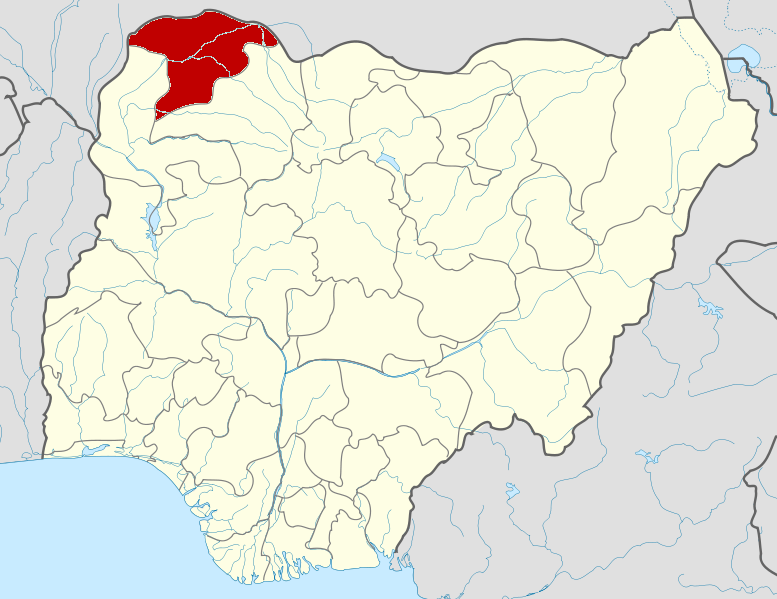
Flooding in northwestern Nigeria (Sokoto state, pictured) destroyed 1 billion Naira worth of crops ($6.7 million).

In much happier news, ICRISAT has been providing some Mali farmers with groundnut (peanut) seeds that take only 3 months to harvest instead of 4. As rain patterns have shifted, assumedly due to climate change, the rainy season has been getting shorter and shorter. If I understand the report correctly, it claims that groundnut production has also increased 10-fold.

They also established a cooperative (starting at 20 members, now 65) to coordinate storage. Each member of the cooperative contributes 20 kg of groundnuts for storage. 10 of them they get back later in the year (as a form of forced storage for behavioral economics reasons) and the other 10 are sold (for about $320) to give the cooperative a source of loanable capital.

Ugandan rice production is up significantly - 66% during the last decade. Instead of importing rice, they now export to South Sudan, Kenya, and DRC. The article credits Nerica (New Rice for Africa) with much of the growth. I take the article to be saying that a new survey by the Ministry of Agriculture claims that rice exports are now valued more than any other traditional food export.

Zimbabwe is going to start handing out agricultural input vouchers to vulnerable farmers this week, entitling them to "10 kilograms of maize seed, one 50-kilogram bag of compound D and one 50 kilogram bag of ammonium nitrate fertilizer."


Tuesday, May 24, 2011

The Faces of Development

Development in Mexico, according to its census (HT: MR via Andrew Sullivan):
In 1990, one in five dwellings had a bare-earth floor. Now only 6% do. … More interesting still is what Mexicans put in those homes. More houses have televisions (93%) than fridges (82%) or showers (65%).
In part that is because of the impressive Mexican work ethic: “Mexicans work an average of ten hours a day, paid and unpaid labor, even though the country is far from the world’s poorest.  Belgians work the least number of hours a day, at seven."

I was quite surprised, though, when searching through Google Images for a good shot of a bare-earth floor. There were more pictures of Westerners deliberately installing earth floors than there were of people too poor to get a proper floor. Searching for "dirt floor" scored somewhat better. So here's another development paradigm for you: Westerners use earthen floors, everyone else uses dirt floors.
Development in Zimbabwe over the last two years of national unity government and dollarization
The economy grew at nine percent in 2010, following on six percent in 2009. Government revenues climbed to 29 percent GDP in 2010; they were just three percent of GDP in 2008. … This good performance starts from a low base; the economy had contracted by more than 45 percent from 1999-2008. Furthermore, world prices of commodities, such as platinum, tobacco and gold, which are Zimbabwe’s main exports, have been on the rise. Weather has been good in the past two years. But the point is that Zimbabwe was able to make good use of these conditions. There was a supply response to high prices in agriculture and mining, and manufacturing showed signs of life.
Development in Africa: “The African Development Bank says that one out of three Africans are considered to be middle class” – that is to say, earns $2-20/day. Of the 313 million in that range, 180 million are between $2-4/day. “Tunisia, Morocco and Egypt had proportionately the biggest middle classes in Africa, while Liberia, Burundi and Rwanda had the smallest.”

Development through sweatshops, consensual market transaction edition: “Field interviews reveal that subjects perceive their alternatives, including agricultural work and street vending, as less desirable when compared to sweatshop labor. Non-monetary benefits are an important part of this appraisal.” Yglesias puts a different spin on it, based on Duflo and Banerjee’s new book on poverty that surveyed poor people and asked what they aspired to. Mostly what they want for their children is a government job, not entrepreneurship: “What the very poor want, overwhelmingly, is a job where you show up, do as you’re told, and get a guaranteed paycheck at the end. Given the fact that the prospects for government employment are always limited, I assume this explains a lot of the appeal of super low wage sweatshop work when it becomes available in poor countries. “

Monday, May 9, 2011

Political Economy of Conflict Prevension

The Economist argues that Ghana blocked AU forces from resolving the Ivorian conflict because Ghanaian cocoa smugglers benefitted, while Nigeria was preoccupied with its own election.


Mamdani on Cote d’Ivoire:
When it came to Zimbabwe and Kenya, power-sharing arrangements were put in place, with a helping hand from SADC in Zimbabwe and the UN in Kenya. The objective in both cases was to avert a full-blown crisis. …  In the Ivory Coast, however, the UN insisted on an election, and … [then] came in with guns blazing to force a military implementation of its preferred solution.
Blattman on Mamdani:
1)      “Outside influence is strong, but this is not a nation that complacently follows the orders of an international agency.”
2)      “Mamdani also holds up power-sharing as a means to avoid crisis. But crisis in what space of time? What one wants is a political equilibrium stable in the long term. I’m less confident that the power-sharing route is a successful one–in terms of either growth or stability.”
3)      “So, for the hundreds of elections yet to come in Africa, what message do you want to send to incumbents or opposition rulers who lose the poll: stand and fight for a power sharing agreement, or accept the outcome?”
4)      “If the 2010-11 violence was the only life lost for legitimate future elections, Cote d’Ivoire could count itself among history’s least bloody democratic transitions. I think Mamdani’s point is that this will not be the last blood shed. He is probably right. But the historian and the economist alike ought to ask: what is the counterfactual? Fewer deaths? Less uncertainty? Lower poverty? Lesser oppression? Personally, I think not. But that is just a guess.”

De Mesquita has another argument for why bad economic times would promote terrorism, even though most terrorists are better educated and have higher income than average. First, if terrorist cells screen for skills that do well in the labor market, they will be more interested in hiring the better educated. Second, if economic downturns increase mobilization, that will increase size of the pool from which terrorists can recruit, enable them to further select from the top.

Wednesday, February 23, 2011

Lit in Review: HIV/AIDS

De Walque reports in third person on his own research:
The pervasive if unstated belief in the HIV/AIDS community is that males are primarily responsible for spreading the infection among married and cohabiting couples.... most couples affected by HIV/AIDS in sub-Saharan Africa live in ... relationships in which only one of the two partners is HIV-positive while the other one is HIV-negative.
Contrary to assumption, however, it is not the case that the HIV-positive partner is most often the male. In fact, a new study found that women were just as likely to be the HIV-positive partner. An earlier study had placed the figure closer to 30-40%. When the same is restricted to women who have been in one relationship for 10 years (reducing the chance of her bringing HIV with her into the union), the proportion is still roughly 1 in 3. Though I don't agree when de Walque calls this "just as likely" I would agree that it calls the basic assumption into question and supports better research into the channels by which AIDS spreads. Ignoring one apparently significant channel by assuming it does not exist not only prevents progress, it serves to further the victimization of women.

Topping this off is another paper (Leclerc et al, 2009) that tried to fit Zambian HIV infection data with epidemiological models and demonstrated just how difficult a task it is to model: "Our reference simulation (H0) was obtained after more than one hundred simulation trials, all the others leading to inconsistent patterns." They find that "the lifetime risk of infection is quite similar for both sexes, and women tend to be infected earlier." "Among the main constraints found in the simulation was the age at peak infection for males. It was almost impossible to reach values greater than 35 or 36 years for men while keeping the main parameters within a range of realistic values."

Another paper, also by de Walque and colleagues, shows that HIV households in Mozambique were not affected more than non-HIV households by the 2007/08 food crisis, perhaps thanks to increased health interventions that increased their labor force participation.

Meanwhile, there is actually good news from Zimbabwe: HIV infection rates halved between 1997 and 2007.
The study cites increased awareness of AIDS-related deaths as the primary cause of the drop. The Leclarc study also reports a drop (or at least a slowing) in infection rates in Zambia since 2001.

Friday, February 11, 2011

What Have You Done for Me Lately?

The BBC on the visit of China's foreign minister to Zimbabwe and four other African countries:
The Chinese use of its veto in 2008 was "a landmark diplomatic decision where it basically saved Zimbabwe from punitive sanctions instigated by an irate and sulky former colonial power", the Chinese news agency Xinhua quoted Mr Mumbengegwi as saying.
"So, now this visit will give an opportunity for Zimbabweans to finally thank China for this act," he said.
Schiller on Adam Smith on self-interestedness (HT: Thought du Jour)
Smith also talks about a selfish passion, which is a desire for praise. He argues that people instinctively desire praise, but that, as they mature, this feeling develops into a desire for praiseworthiness. …. He uses that to show that what people really want is to be deservedly praised. And that turn of mind, which develops as people mature, is what makes us into people with integrity. ….
I think this underlies how the economy works. We start out with selfish feelings, which are intermixed with feelings of empathy for others, and then we develop this mature desire to be praiseworthy. I think it is central to our civilisation that people do that.
The Economist on the West's hypocracy: (Aid Watch on the same: one entry, another)
If the West cannot back Egypt’s people in their quest to determine their own destiny, then its arguments for democracy and human rights elsewhere in the world stand for nothing.

Tuesday, December 14, 2010

LDS around the world

The Church of Jesus Christ of Latter-day Saints (aka Mormons) had a brief, government-authorized presence in Burundi before civil strife broke out in 1992. Last August the first officially recognized church unit in Burundi held meetings again. The article tells the story of the Malabi family, their sacrifices, and the regrowth of the Church in Burundi. It mentions how a group of hundreds of people who wanted to join the Church had formed an informal church group and when they found Bro. Malabi asked him to visit them and teach them more.
Brother Malabi made the long trip to Uvira to teach them two or three times a month. This continued for five years. He traveled at his own expense, usually alone but sometimes accompanied by his wife or one of his children. When asked how much he paid for each trip, he responded, "$10". That travel expense of $30 per month was 5 percent of his total monthly income of $600.
I thought I had blogged about this earlier, but I can't find it now:  LDS Apostles Holland and Christofferson visited a number of African countries last month, pronouncing blessings on Burundi and Angola."Elder Holland expressed his feeling that Africa had been held in reserve by the Lord in the spirit of "the last shall be first" and that Africa would someday be seen as a bright land full of gospel hope and happiness." Both blessed "government leaders as they seek to serve the people and prayed that persons of ability and integrity would be drawn to public service." Picture shows members in Zimbabwe.

Proselyting missionaries save up to help pay for their endeavors. A recent article showcased what a young man in the Democratic Republic of Congo does to save for his mission:
Each day, Sedrick pushes his bicycle, laden with 200 pounds of bananas, for two hours to get to the market. He sells the bananas for the best price he can, then rides back for another load. He does this several times a week. Sedrick has been doing this backbreaking work for four years.
Sedrick told me that he makes about $3 a trip. From that he must buy his food, repair his bicycle and save for his mission. His savings will only pay for the high cost of getting a passport in the DR Congo. Member contributions to the General Missionary Fund will pay the rest.

Putnam and Campbell's study of religion in America shows that "Religious Americans are more likely than others to act in a variety of ways that benefit society, and they tend to be more actively engaged in the surrounding social sphere as well."

The Kosovo ambassador to the US was a refugee ten years ago during the ethnic cleansing. This week during a trip to speak at Utah Valley University he visited Church headquarters and LDS Humanitarian Services to thank the Church of Jesus Christ of Latter-day Saints for their humanitarian involvement during that time.

Church service missionaries (different from proselytizing missionaries) rebuilt schools in Peru following the 2007 8.0 earthquake.
The Church provided the rebuilding resources then contracted with local construction companies to build the classrooms. Church engineers, added Brother Ramirez, oversaw every aspect of the school building, from the foundation to the roof and right down "to the amount of mixture in the cement." ...

Gil Villa is the mother of a child attending the Chincha school. She has noticed a difference in the students and her fellow parents since the rebuilt classrooms were opened last year. The children, she said, take ownership of their school. They are quick to report vandalism and other abuses. And the parents are doing their part to help.
"Every week parents come to clean the school," said Mrs. Villa. "We come every Friday to polish and wax the floors. We clean everything so on Monday, when the children return, they find a clean school."
 And a brief mention of last week's flooding in Venezuela and LDS relief efforts there, and cholera relief efforts in Papua New Guinea and Haiti. The Church also established its first stake [multiple congregation unit] in Guam for the 2,000 LDS living there.

Thursday, October 14, 2010

African Agriculture: Chicken Imports, Bananas, and Bangladesh Land Grab

The Bangladesh government joins the group of countries purchasing and leasing land in Africa to grow food for home. They have contacted governments in west Africa (Ghana, Senegal, Cote d'Ivoire, and Liberia). Unlike many other "land grab" proposals, these appear to promise a 50/50 split of food grown so that if Bangladeshi investments can double yields, it is possible for the countries to increase their food availability. As I highlight in my upcoming food policy textbook, cereal yields in west Africa are still more than half what they are in other regions of the world so such a large increase is possible.

Zimbabwe's chicken farmers are upset that the government lifted the temporary ban on chicken imports. Most of the imports come from Brazil and South Africa, which farmers claim heavily subsidize their chicken industries. One kg of chicken costs only $1 to raise in Brazil, but about $2.85 in Zimbabwe which forgoes the use of GMO-inputs. Local chicken sells for roughly $4-5 per kg while the imported chicken goes for $2/kg. The Zimbabwe Poultry Association head complains that "the problem is" lack of government price fixing to prevent retailers from raising the prices on local chickens, which cost much less at wholesale than retail and unfair dumping. Unmentioned are ways government could reduce local costs, help chicken farmers move into other industries, or support both farmers and consumers. Most of what he would like to see happen would benefit producers at the expense of consumers and pit one group of producers against another.

An article praises the benefits of banana culture research and constructing a center to provide marketing and extension services in central Kenya.

Tuesday, October 5, 2010

Alternate estimates of the hungry

While Easterly expresses his concerns over the FAO's pronouncements on the number of hungry people in the world, Gallup polling broadly supports the FAO's estimates. Telephone interviews asked 1,000 or more households in 113 countries if they had had difficulty purchasing food in 2009. In the median country, 26% of respondents answered in the affirmative. Gallup does the math and estimates approximately 1 billion people suffered from food insecurity at some point in 2008/2009. They also report the change in a number of high-hunger countries (right). The largest improvements have been in Uganda, Burundi, and Zimbabwe; the worst changes in Ecuador, the Philippines, and Cameroon.

In other hunger news, Nucifora at the World Bank shows that while Mozambique's reinstated food subsidies may quell the food riots there, most of the benefits are being captured by the wealthiest quintile. Apparently, monetary policy has had a huge effect here as well, with food prices following appreciations and depreciations in the last few years.

An FAO subcommittee has released a new aquaculture certification program:

Thursday, September 30, 2010

Big Bag o African Blog Links

So there's a plan for communities in Southern Sudan to arm their young men so they can fight off the LRA when it comes to town. Wronging Rights' poll on "what should I be yelling as I tear out my hair" is delicious.

The  Ask Your Government initiative asked governments where the development money goes. Researchers then measured how responsive governments were to the requests. Podcasts are available for the responses from Uganda, Kenya, Zambia, Malawi and South Africa. The relative winners in SSA are Egypt, Ghana, Uganda, Kenya, Zambia, Namibia, Botswana, and South Africa. South Africa was as forthcoming as the US, England, France, and New Zealand or more so.

WalMart in Africa, a hopeful perspective.

Social entrepreneurs protecting Kenyan topsoil by encouraging the growth of micro-forestry:
After each harvest cycle, KOMAZA processes the lumber from farmers' trees into a variety of products including firewood, electricity poles, sawn lumber and even luxurious floorboards. The company then sells the products on markets that would normally be completely inaccessible to smallholder farmers. KOMAZA projects that each microfarm will return over $3,000 to each family at the final harvest, a huge sum for families accustomed to living on less than $300 a year.
Happy belated 50th birthday, Mali. Fun song.

Would Obamacare cover this traditional doctor's services? Everything from diabetes and TB to not being liked at work, bad luck, STDs, and court cases.

Kraft is encouraging Ghanian cocoa farmers to become fair trade certified.

A less than positive piece on Zimbabwe's land reform at machete point. Best quote from the Southern African Confederations of Agricultural Unions research report cited in the article: "tenure reform is more important than land reform in many countries." It applies this to Zimbabwe's and South Africa's very different land reform systems.

Friday, September 24, 2010

Meanwhile in Zimbabwe


Godfrey Marawanyika tells about one Zimbabwe's successful new farmers. Around 2000, Mugabe seized the land of many white farmers and passed it out to some of his more clearly African constituency. The article has a fascinating schizophrenia of a tale in three parts: that one farmer's success, the overall perceived failure of the plan, and hence a dual picture of Mugabe as folk hero and corrupt tyrant. The racial comments are also worth reading. Here are excerpts of these points:

To get him started, a neighbouring white farmer lent him a tractor to prepare land to grow maize and tomatoes and in time he tried tobacco farming. The white farmer declined to be interviewed, but Mhembere said the gesture put him on a path toward success, placing him among a new generation of farmers who increased Zimbabwe's tobacco output for the first time in eight years. ... [Production is currently half what it was in 2000]

Mugabe said the scheme was needed to correct the legacy of colonialism, but the reforms were marred by deadly political attacks against farmers, who saw their land turned into militia bases for ruling party attacks on the opposition. Hundreds of thousands of black farm workers on white farms were forcibly evicted, while Mugabe's top aides seized prize farmland. Small farmers like Mhembere were often left with little support to finance their operations. Production of both food and cash crops like tobacco plunged, leaving Zimbabwe dependent on food aid and drying up foreign currency reserves.

For nearly a decade, government failed to help the resettled farms use their land effectively with a select few benefitting from handouts from the central bank, while their meagre incomes were ravaged by hyperinflation....

It remains to be seen if Zimbabwe's farms are solidly on an upward trend, but Mhembere says land reforms were among the best policies Mugabe adopted since independence from Britain in 1980. 
"If ever President Mugabe did anything for the majority in this country it is the land reform which is real empowerment for blacks. Land reform is about sharing, land reform was never about chasing whites. The problem is that some of the whites did not want to share."
Meanwhile, Mugabe and 80 person, $2 million, entourage arrived at the UN MDG Summit to declare US/EU sanctions were preventing them from achieving the poverty and hunger goals and claim that they are doing very well at meeting the education and HIV goals.

Friday, July 9, 2010

Random thoughts

Tax Code and the Bible
Of only one other book can it be said ... that great minds have devoted countless hours to the scrutiny and learned exegesis of every passage; that differing interpretations of the text have given rise to some of humanity's most epic struggles; and that, while millions mine it for valuable insights and inspiration, those who claim to live by the book and follow its precepts probably far outnumber those who actually do so.
--Mark Iwry, senior advisor to the Treasury secretary, on the similarity between the tax code and the Bible

WE'RE ALL GOING TO DIE!!!!! So why are rational economists still using cash?

Q: How many Austrian economists does it take to screw in a lightbulb?
A: You can’t make quantitative predictions.

Q: What do you call 100 Austrian Economists at the bottom of the ocean?
A: A reaction to monetary policy incompatible with individual time preference.
Thank you, Newmark and The .Plan.

And from Marginal Revolution: Laundering money legally and rationally in Zimbabwe:
Low-denomination U.S bank notes change hands until they fall apart here in Africa, and the bills are routinely carried in underwear and shoes through crime-ridden slums.
Some have become almost too smelly to handle, so Zimbabweans have taken to putting their $1 bills through the spin cycle and hanging them up to dry with clothes pins alongside sheets and items of clothing.
A commenter reminds us that Africa is NOT a country and Zimbabwe is, in almost all things, an outlier:
In the other african countries I've visited [the rules are] no tears, no small bills (or valued at a lower rate), no 100s before 2006 (due to fear of counterfeiting or to allow frequent travelers to buy old 100s at less than face value locally and spend them outside the continent). We have the phenomenon of ironing money, but I doubt many would risk putting a dollar in the wash.

Tuesday, May 18, 2010

Food in Africa: Too Much and Too Little

The African Agriculture Blog warns us of two expected changes in the African food system. One is abundance and low food prices, the other is starvation and high food prices. Let's hear it for the importance of integrating African markets:

South African bumper harvest depresses Botswana cereal prices
"A three-million tonne surplus in maize from South Africa has resulted in a depression of prices" in Botswana. The prices the government uses to buy from farmers is expected to fall from P70 to P60 for a 50 kilo bag of maize, which is on the high end of what S. African farmers are receiving. Farmers who contracted with the government earlier, however, have already locked in higher prices.

Niger is on the brink of food shortages
Millions of people in Niger are at risk of running short of food, relief agencies have warned, as high prices and a lack of rain take their toll on one of the world's poorest countries. The landlocked west African nation lies at the centre of a food crisis spanning the Sahel, the arid region on the southern fringe of the Sahara.
The United Nations estimates that 7.8m people in Niger could be affected unless donors deploy some $130m (€102m, £88m) of emergency aid immediately. Parts of Mali, Burkina Faso, northern Nigeria and central Chad are also at risk. ...
Weekly admissions of malnourished children [in southern Niger] to MSF's [Doctors Without Borders'] main feeding station in Zinder doubled in the second half of April. ...
After poor rains last year, the cereal harvest was 31 per cent lower than in 2008, says the World Bank. ...
A government bulletin from mid-April found that prices for staples including millet, sorghum, maize and rice were "at an exceptionally high level", standing between 6 per cent and 17 per cent above the average of the past five years.
Compared with the same month in 2005 - when a plague of locusts contributed to food shortages - prices for millet, sorghum and maize were all higher this April, while the price of imported rice had increased by more than a third. ...
"There is enough food in the area but the prices are too high," says Johannes Schoors, Niger country director for Care, an aid agency.
During a visit to the region that included Zinder in late April, Sir John Holmes, the UN's senior emergency relief official, said that without structural changes, "it will become increasingly difficult to contain these recurrent crises, which do so much to undermine economic and social progress in the Sahel".
Sir John urged investment in irrigation and measures to prevent the encroachment of the Sahara. These steps would be more effective than periodic emergency appeals.
Governance problems are holding up aid and development flows while poor infrastructure and underdeveloped food markets and infrastructure hamper intra-regional trade in grains. (Note: the distance from Cape Town, S. Africa to Zinder, Niger is 3364 miles. That's a thousand more than from here in Ithaca, NY to my parents in Santa Barbara, CA or 100 less than the distance from here to London. It's not minor infrastructure improvements we're talking about, but it's still shorter than sending food from here to Zinder [5350 miles].)

Meanwhile, they also report that Zimbabwe's parastatal is giving 75-80% subsidies on fertilizer for winter wheat farmers. The amount farmers can buy depends on whether they sell to the parastatal marketing board or not and how large the farm is. The board is also encouraging farmers to do their banking with the board.

Wednesday, February 17, 2010

When "bad" governance is popular

Over at Aid Thoughts there is a fascinating discussion of the origins of Zimbabwe's current economic plights. Ranil makes a few very important points.

First, Mugabe is popular in his own country:
It’s difficult for Westerners, particularly those who have come of political age in the last ten or fifteen years, to understand it, but Mugabe remains popular. Almost everyone accepts he has overstayed his welcome, but still hold affection for him. Malawi inaugurated a Robert Mugabe Highway just a couple of years ago; similar roads are found in most major African cities. Yet, in the West, his name is a by-word for economic mis-management, suppression of rights, and all that is wrong with governance in Africa.
This divergence he argues is largely to due to differences of opinion about the land grab ten years ago. He points out that several things hit Zimbabwe at roughly the same time: structural adjustment led by the WB and IMF, the land redistribution, and a drought not the least of them. Ranil claims in the comment section that his main point is that Zimbabwe's present economic difficulties stem from many factors outside Mugabe's control, and simply linking "bad man = national poverty" is a gross over-simplification. I read a different main point:
the land seizures were and remain overwhelmingly popular policies within Zimbabwe – because they rectify an injustice that was only a couple of generations old, and one which blacks had never been allowed to question until 1980. ... When land reform finally occurred, Mamdani points out that in economic terms if not political ones, it was a democratic revolution: more than one hundred thousand small owners joined the base of the property pyramid.

The costs from the land redistribution have not been even across agriculture:

the white commercial farms, focusing on export crops such as tobacco, have been devastated by land reform. Meanwhile, the large plantations run by corporations, untouched by land reform, have continued as normal, producing sugar, tea and coffee. And maize, the most important food security crop, is largely a peasant crop – land reform has not damaged it, though drought has reduced production by almost 90%. In fact, research by IDS in Sussex suggests it is these small farmers who have been most resilient to the political end economic turmoil, as well as drought.
 And replacing Mugabe alone will not bring about prosperity. What is needed? Here's a partial list:
the land seizures were popular, remain so and will not and should not be reversed – they simply address an older injustice. The agriculture sector will need to be reimagined as one split between plantations and small- and medium-sized farms. To make this work will require an explicit economic strategy. The urban economy is still in complete tatters: no industry still stands in Zimbabwe, and the process of rebuilding them after the damage of structural adjustment will take far longer than it took to break them down.
I hope my readers appreciate the irony of discussing all this immediately after discussing Easterly's three cheers for democracy. But even in Easterly's post, he acknowledges that almost nothing is correlated with economic growth, neither democracy nor this sort of popular bad governance. A complex subject, nicht wa'?

Thursday, January 28, 2010

Monetary Comparison 1: Size Counts

Yesterday we saw a 0 Rupee bill. How about $100,000,000,000,000 today for comparison?

Both are connected to corruption and remarkably enough, they're both worth about the same!